Mr Berger, why are children and young people becoming increasingly anxious?
I think it's a big problem for young people that our society has changed so profoundly in recent decades. These changes can certainly be compared to the industrial revolution. I'm referring in particular to family structures and the digital world. Added to this is enormous pressure at all levels: school, leisure activities such as sport and music, and interpersonal relationships.
Why is this problematic?
Pressure affects people in different ways. While many young people grow from it, some react by developing mental health problems such as depression, anxiety or other problematic behaviours. What used to be the fear of the sabre-toothed tiger is now the fear of social exclusion or the fear of no longer being able to meet the demands of school.
Can you describe the changes in more detail?
Let's take the society in which we grow up and live. In the past, it was completely normal to grow up in communities with many family members. Grandparents, uncles and aunts lived nearby; it was the exception for someone to move away for work.
This created a kind of multi-generational control, a social awareness of what everyone was doing. Of course, this wasn't always a good thing, but it gave the whole community a certain sense of security. Children could rely on there always being someone there for them. For many people today, this is no longer the case.
And what role does digitalisation play?
Children are coming into contact with the virtual world at an increasingly early age. There, they are exposed to the worst images and experiences without any adult supervision. It is a reality that nine-year-old girls are being traumatised because they are shown pornography, for example.

In secondary school, more than half of children now have a mobile phone – and thus access to the digital world. This represents a profound change compared to childhood before digitalisation. Not only in terms of the content available online, but also in terms of the way we communicate and the fact that we are constantly available. The majority of children cope well with this development, but those with a certain disposition are at risk of not being able to process their experiences and developing a mental disorder.
What role do parents play in supporting their children through this change?
They are hugely important role models for their children. However, many people do not realise that this does not only begin at school age, but already in the first month of life. If parents are always on their mobile phones, this contributes significantly to these children not coping well in the real world later on as teenagers.
Without a stable bond, there is a lack of inner security, and children learn less effectively how insecurity feels and how to deal with it.
Even if parents use mobile phones or tablets early and intensively to calm their little ones, this can impair their development. This is because a secure bond with mother and father is crucial in the first years of life. It gives the child a sense of protection, reliability and the feeling of being seen. Building on this security, they can explore the world with curiosity, gradually detach themselves and become independent in an age-appropriate manner. Without this stable bond, there is a lack of inner security, and children are less able to learn what insecurity feels like and how to deal with it.
Why is that?
If parents fail to give their children sufficient attention, important moments of eye contact, resonance and joint regulation are lost. In addition, children's brains are not yet sufficiently developed to make sense of digital content. This can lead to overload and hinder the development of attachment and autonomy. This results in a lack of the essential feeling of security that allows children to leave an attachment without fear and be alone. However, this is by no means solely the fault of parents. Overall, there is too little consistency for children.
Why is that?
The changed structures. In my generation, for example, one income per household was sufficient. Today, that is usually no longer possible; both parents have to work. But we have not yet developed sufficient new structures to compensate for this.
Or take school: when a child moves from primary to secondary school, they lose their familiar team of teachers and suddenly have ten teachers who are responsible for them, none of whom feel accountable. This coincides with a period of development in which more than half of all mental disorders begin – most commonly anxiety disorders. However, if children have been able to experience healthy attachment from early childhood, they are often better able to cope with such transitions and changing caregivers.
So what can parents do to best protect their child from anxiety disorders?
It is important that they establish a good relationship with the child from the outset and offer age-appropriate interactions that meet the high need for security in early childhood. These interactions must keep pace with the child's ongoing development of autonomy. Difficulties arise when parents unconsciously transfer their own fears onto their child and thus do not trust them to do certain things or withhold opportunities from them. It is so important that children are able to have their own experiences.
Being permanently online also exacerbates bullying and exclusion.
What does that mean specifically?
Every child should have an island outside their family – perhaps a sports or music club. Such an environment can be a playground for their own experiences. There, they can interact with their peers, overcome inner fears and see what others do in real life. Problems arise when, during times of transition, a child is no longer really at home in the real world, but mainly in the digital world. This is a breeding ground for various forms of anxiety.
What do you mean by that?
Social media is a major risk factor, especially for girls and young women. In particular, the fear of missing out, of no longer belonging, drives them 24 hours a day, seven days a week. This fear, also known as FOMO (fear of missing out), is omnipresent, and children are unable to find emotional peace. The desire for social validation is so strong that everything else takes a back seat, even sleep.
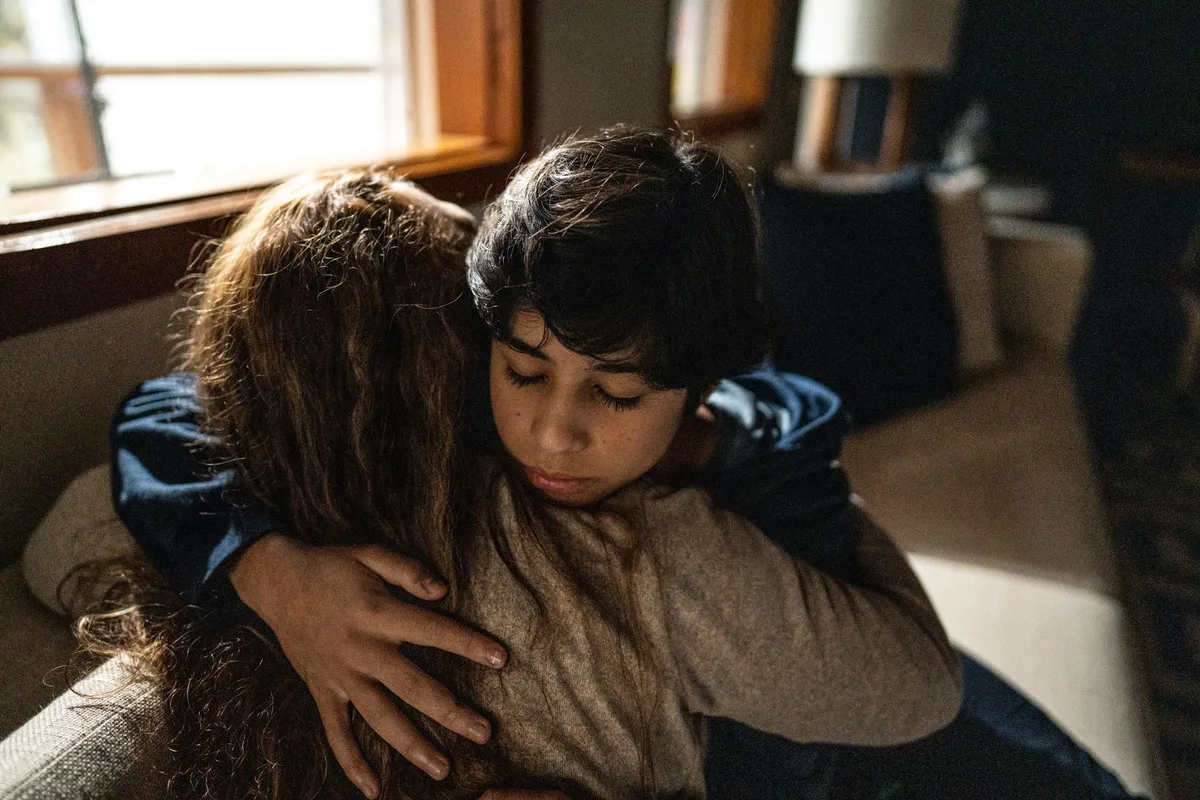
Being constantly online also exacerbates bullying and exclusion. This no longer happens only at school, but around the clock. As a result, social isolation has also increased significantly. A digital chat simply cannot compare to a conversation where you look each other in the eye or even give each other a comforting hug. The aforementioned sleep or chronic sleep deprivation is another risk factor that many children and young people now suffer from.
Why is that?
Many children who come to us have their mobile phones turned off for perhaps four hours at night. They stay in contact with their friends or scroll through their phones late into the night or early in the morning. This brings us to another problem: it is virtually impossible to pick up a mobile phone without encountering topics such as violence, war, the climate crisis or similar issues. All of this is stressful information that a child first has to process.
Does that mean, conversely, that you should steer clear of the digital world if you want to avoid anxiety disorders?
No, that's unrealistic. But as a mother or father, you should be aware of the effects that using digital media can have on your child. This modern technology also presents an opportunity: there are an incredible number of possibilities for preventing and treating anxiety disorders.
For example, you can do breathing exercises with your children with the help of mindfulness apps such as Headspace. There are also some great resources online in the area of psychoeducation, i.e. education about illnesses, and it is naturally much easier for parents to find information here than to go to a counselling centre.