

Dirty and disgusting – that's what many school toilets look like. This can lead to children and teenagers preferring to hold it in until they get home. Is that a problem?
George Marx begins by reassuring us: «For most children, holding back from going to the toilet is perfectly normal and not a sign of illness,» says the paediatric gastroenterologist, who works at a paediatric practice in Dübendorf, Zurich, and at the St. Gallen Children's Hospital.
Although these children and young people often go for long periods without using the toilet, they have no trouble doing so as soon as they get home. They do not suffer from stomach ache or constipation and are able to carry out all their activities as normal.
The situation is different when the thought «How can I avoid having to go to the toilet?» dominates everything. When a child stops playing football at school because they're afraid they won't be able to hold in the urge to go. When they constantly refrain from eating and drinking so as not to have to go to the toilet. As a result, they don't consume enough fluids or energy, which means they can no longer concentrate properly and their performance in sport suffers. Above all, however, it is important to take a closer look if this leads to obvious medical problems – such as urinary retention, urinary tract infections or constipation.
Dirty or broken toilets, people breaking the rules: who'd want to do their business there?
George Marx, gastroenterologist
The number of unreported cases is high
There are no official figures on how many children and young people consistently avoid school toilets or generally avoid using public toilets. «The number of unreported cases is probably quite high,» estimates George Marx. Because the subject is considered very taboo, it is rarely discussed. Parents usually only become aware of the problem when their child regularly complains of stomach ache.
Annabel Zwönitzer is a senior psychologist at the Department of Child and Adolescent Psychiatry at the University Psychiatric Clinics Basel (UPK) and counsels parents and children during specialist consultations on elimination disorders. She says this issue becomes particularly relevant when children start school.
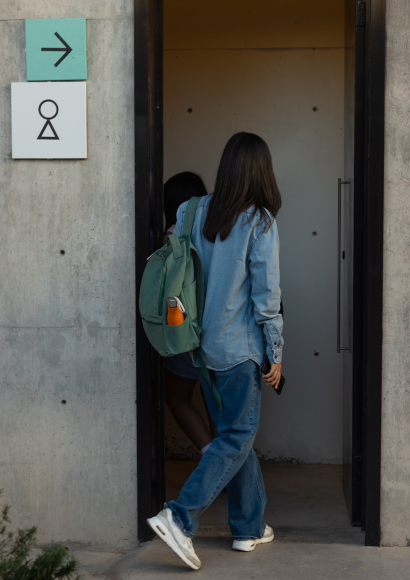
As well as the many new experiences, this stage also brings new challenges when it comes to using the toilet: children now have to go to the toilet on their own, possibly having to walk further than they did at nursery. Above all, however, the toilets are often in a poor state of repair. «The children have to get used to all of this first,» says Zwönitzer. And: «Those who struggle with it can easily slip into avoidance behaviour, which is very difficult to break.»
In fact, school toilets are often (deliberately) soiled or damaged – just as is the case with many public toilets. For example, toilet bowls and washbasins are blocked with toilet paper, causing them to overflow; locks are broken; walls are daubed with graffiti; and paper towels are torn from the dispensers and scattered about.
Cleaning the toilets yourself
In Beringen, Schaffhausen, the school management therefore saw no other option but to have the primary school pupils clean the toilets themselves after this year's spring half-term, as reported by the online portal «20 Minuten ». For the same reasons, the school management in Bümpliz, Canton of Bern, removed the doors to the toilet blocks for a while – a tactic also adopted by the vocational school in Winterthur, Canton of Zurich.
«It just stinks and it's disgusting,» say many pupils. What's more, school toilets – particularly at secondary level and above – often resemble a common room with far too many people doing things they're not supposed to, such as smoking or using mobile phones. «Who'd want to go to the loo there, and possibly get pelted with little balls of toilet paper whilst they're at it?» asks George Marx.
If a child frequently holds back the urge to go to the toilet, they find it increasingly difficult to tell when they actually need to go.
Annabel Zwönitzer, psychologist
The doctor has observed that feelings of embarrassment, fear of time pressure or of what others might say also prevent children from using the school toilets. Even gender-neutral toilets, which have now replaced the separate toilets for boys and girls in some school buildings, do not necessarily make children more likely to use the toilet. «These shared toilets are often particularly difficult for girls who are on their periods,» says one mother. In short: going to the school toilet can be a challenge.
School trips are becoming a problem
Moritz, a fictional case based on the accounts of the two experts interviewed, experiences the problem something like this: at school, he drinks as little as possible so that he doesn't have to go to the toilet. Although he feels the urge to urinate during break time, he doesn't go to the toilet. He finds it disgusting in there and is afraid that other children will hear him.
During lessons, he becomes increasingly restless, shifts back and forth on his chair or discreetly holds his lower abdomen. After school, he rushes straight home to empty his overfull bladder. He has also started to avoid school trips and sleepovers at friends’ houses. Recently, he has also been complaining frequently of stomach ache.
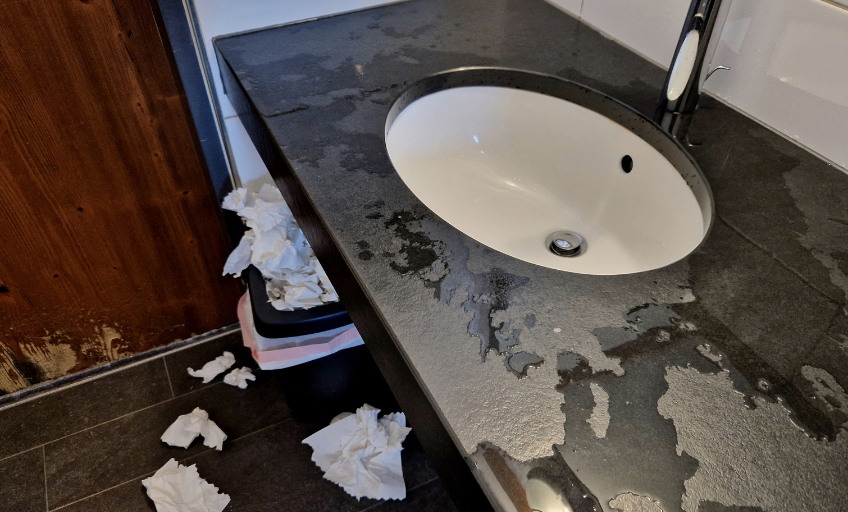
Ten-year-old Lena – also a hypothetical case – had a negative experience in the school toilet right at the start of her school days. The toilet was very dirty, and other children were laughing and shouting. As a result, she rarely went to the toilet there afterwards. Instead, she tried to suppress any urge to go whilst at school, telling herself, «I'll hold it in until I get home».
At first, this worked quite well, and it soon became a habit. Eventually, Lena stopped using the school toilet altogether. Sometimes she would hold it in for six to eight hours. Over time, her body had got used to it, and Lena's urge to pass stools and urinate became weaker. Even at home, she now rarely went to the toilet.
The physical consequences
«The more frequently and for longer a child holds back from going to the toilet, the greater the likelihood that sensitivity in the bowel and bladder will decrease,» says Annabel Zwönitzer, explaining the physical consequences. «There is a risk that children will then find it increasingly difficult to tell when they actually need to go to the toilet.»
The stools become harder because they remain in the bowel for longer. This makes bowel movements more painful and leads to constipation – which in turn means that people avoid going to the toilet even more, for fear of pain. A vicious circle develops. This was the case for Lena too.
However, classic severe constipation brings with it even more symptoms: «Anal fissures, blood in the stools, abdominal pain, loss of appetite,» lists George Marx. Sensitivity in the bladder also decreases if the urge to urinate is repeatedly ignored. At the same time, the likelihood of urinary tract infections increases . Furthermore, some children start wetting themselves or soiling their clothes again because they are unable to hold it in despite their best efforts.
Risk of blockage
Marx points out that, particularly with younger children – such as five- and six-year-olds – there is also a risk that they will quickly become conditioned if they do not use the toilet whilst away from home for several days. In other words, it is then difficult to break this habit, and they are more prone to constipation.
If a child suffers from constipation, has frequent urinary tract infections or generally wets or soils themselves, it is important to consult a paediatrician. From a physical perspective, the main approach involves the use of laxatives – that is, medicines that facilitate bowel movements, stimulate the bowel or soften the stools. This is intended to reduce the child's discomfort, thereby enabling them to use the toilet and return to regular bowel movements.
People with faecal anxiety are unable to pass stools outside their own home.
«At the same time, it's also about teaching them how important regular bowel movements are,» says Annabel Zwönitzer. That is why the team at the specialist clinic for bowel dysfunction at the University Psychiatric Clinics Basel also works with dietitians. Those affected should learn to drink more, exercise more and eat more fibre.
Fear of the toilet
In extreme cases, however, repeatedly delaying toilet visits and the resulting constipation can lead to the development of an anxiety disorder – known as parcopresis, faecal anxiety or «shy bowel» syndrome. This is a form of social anxiety disorder in which sufferers are unable to pass stools outside their own home.
A fear of noises, smells or being judged by others can lead to severe avoidance behaviour. «This is the case when these fears significantly restrict everyday life,» says Annabel Zwönitzer, «for example, when someone avoids using public toilets for several months.» Whilst such serious consequences are rare, they do occur.
If your child doesn't want to use the school toilet
What parents should avoid doing
- Do not punish, do not shame, do not put pressure on
- Do not talk to others about the child (in their presence)
- Do not make problem behaviour the overriding main issue
How parents can help
- As part of developing good hygiene habits, remain calm in the event of minor accidents and offer positive encouragement
- Talk to the child in a way that is appropriate for their age («How are you feeling right now?»)
- Remind them regularly, but without putting pressure on them («Don't you need to go to the loo again?»)
So what is the focus of the treatment? «Taking the pressure off the child and easing the strain on the whole family,» says Zwönitzer. The aim is to address the causes of the anxiety and find strategies to help the child cope with it more effectively.
Lena, too, ended up going to the paediatrician with her parents. Her painful constipation is long gone. She still doesn't like using the school toilet – but she tries to force herself to go at least now and then. Moritz, on the other hand, is still working on it.
Individual behaviour
But how many trips to the toilet a day should there be? Where exactly is the line between normal and abnormal behaviour? «It's very fluid,» says George Marx. «How often children need to go to the toilet – or don't – and how their digestion works varies greatly from child to child and cannot be generalised.» Some children go to the loo constantly, whilst others can hold it in for longer on their own. It also depends very much on how much they drink.
With many children, it is hardly noticeable that they drink very little or never go to the toilet.
Annabel Zwönitzer, psychologist
This makes it all the more important for parents to listen attentively to their child. Especially if there are signs that they don't like going to the toilet at school. «With many children, it's hardly noticeable that they drink very little or never go to the toilet,» says Annabel Zwönitzer.
Sometimes it's also worth involving the teacher. This is because, particularly in Year 1, some children find it difficult to speak up when they need to go to the toilet – «because they realise: ‹The teacher can decide that›», says psychologist Zwönitzer. Children who want to follow the rules, in particular, sometimes find it hard to listen to their own needs in this situation. It can help if the teacher gives explicit permission and says: «You're allowed to go to the toilet at any time.»


