

Emma throws the letter from the school with the information about the nursery trip into the waste paper bin. Her teacher said this morning that the children would need good footwear for the trip – ideally walking boots. Emma doesn't have any walking boots. If she were to give the letter to her mum, her mum would press her lips together, take a deep breath and go completely quiet. Then she'd say, «Oh dear,» and be strangely distant for the rest of the evening. It's always like that when the family needs something that costs a lot of money. Emma's family is «struggling», «has to make do», and is «on a tight budget».
But what exactly is meant by «struggling financially»? Where does poverty begin? According to the guidelines of the Swiss Conference on Social Assistance (Skos), the poverty line for a family of four with two children is 4,051 francs a month. Anything below that is not enough. Yet the causes of poverty are complex.
Educational background, a lack of access to education, and the consequences of divorce or illness often play a key role. Single parents in particular are affected by poverty at a higher-than-average rate in Switzerland.
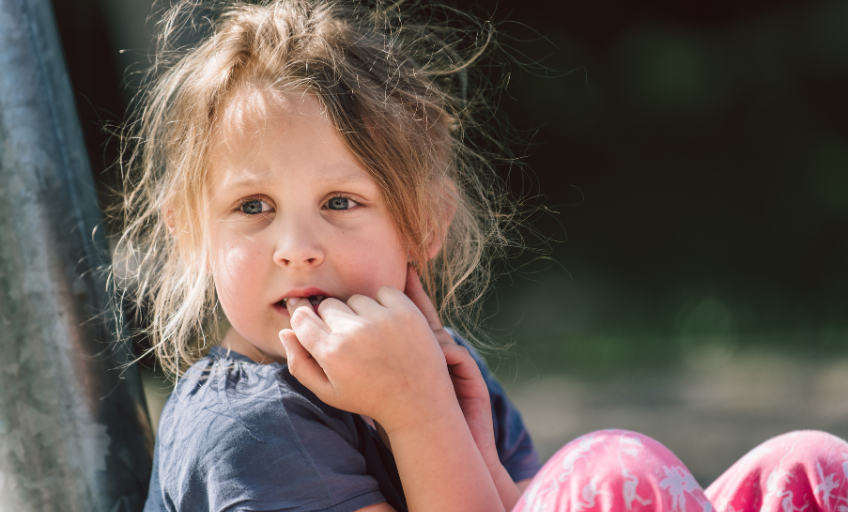
Children affected by poverty grow up in a chronically stressful environment.
Andrea Schmid-Fischer, budget adviser
A look at the budget of a family living close to the social welfare threshold highlights their precarious situation: even a birthday present costing 12 francs or a hot dog at a football match for 5.50 francs pushes them over the limit – if they haven't already been pushed over by other unforeseeable expenses such as a bicycle repair or a bus journey to hospital.
«Children living in poverty grow up in a chronically stressful environment,» says Andrea Schmid-Fischer. She heads the budget advice service at the Lucerne Women's Centre. «Every request a child makes – whether for a larger pair of trainers or an ice cream – causes stress.»
Existential fears
Regula Schmid, a social worker, sees this first-hand when she supports families. «Existential fears are pushing parents to the brink of exhaustion,» says the team leader of the Social Pedagogical Family Support (Sofa) programme at the Utenberg Children's and Youth Centre in Lucerne, an outpatient, outreach support service for families.
She knows the consequences of these fears. When you're busy just trying to get on with your work so as not to lose your job, trainers that are too small are a minor issue. At the same time, the messages from nursery and school keep coming: yesterday, the raincoat wasn't packed; today, Mum's signature was missing.
«And at some point, the children make the information sheet about the school trip disappear because they know they don't have any walking boots,» says Schmid. «Families affected by poverty therefore often live very secluded lives.» Children's issues overlap with those of adults, and parents scarcely have the energy left to deal with what might seem like minor matters – such as trainers.
Poverty doesn't come on its own
«Poverty does not occur in isolation,» says Regula Schmid, «but leads to problems in several areas – and ultimately to families being overwhelmed. Parents are no longer able to support their children adequately.» This is where social-educational family support comes into play. In addition to its primary role of providing family coaching on parenting issues, it can, for example, arrange free leisure activities for families, help them register for such programmes, or provide the teacher with a pair of rain trousers which she can give to the child if needed.
«We listen, connect and sort things out,» says Schmid. Many parents are deeply afraid that their children might be taken away from them by the Child and Adult Protection Authority (Kesb) or that they might have to claim social security benefits. Furthermore, the issue of poverty is associated with a great deal of shame. «Our first task is to ease that pressure.»
We are not informed about financial difficulties. However, we have been trained to recognise signs of stress in children.
Wendela Martens, Headteacher
Wendela Martens, headteacher of the St. Karli School in Lucerne, is all too familiar with the lack of rain trousers and stressed-out children. The school, situated on the banks of the Reuss, brings together children from two neighbourhoods: the affluent Bramberg, with its detached houses, and the Basel- and Bernstrasse areas, where rents are low and the proportion of families with a migrant background is high.
Identifying children affected by poverty
«We aren't told about financial difficulties,» she says. «But we're trained to recognise signs of stress in children.» For instance, children under pressure tend to be more sensitive and are either very withdrawn or hyperactive. «In such cases, we take notice,» she says. Sometimes these children also find it difficult to be separated from their parents because they take on responsibility for them and worry about them.
Children living in poverty tend to be sent to nursery earlier. Their motor skills are less developed, as their parents are less likely to take them out into the countryside. «A gap is certainly opening up,» says Martens. «Children from better-off families are strongly encouraged at home and tend to start nursery a year later – and better prepared.»
What the school is doing
This is precisely where the «Hurlibus» project at St. Karli School comes in: «We offer families free support with questions about supporting their child at home, about the school system, or about helping the family build social connections with the neighbourhood and the school,» explains Martens. For example, teachers accompany families to playgrounds or help them enrol their children in free leisure activities or after-school care. This makes it easier for mothers to get back into work.
«We live in a materialistic society,» says Andrea Schmid-Fischer from the Women's Centre. «Only those with money are considered to be somebody.» Yet the Constitution already enshrines the principle that the dignity of every individual must be respected and protected – entirely regardless of income or other factors. Nevertheless, differences are evident in reality: «Low self-esteem and low social esteem are more common among children who grow up in poverty,» emphasises Ingrid Hess, media spokesperson at Skos.
The art of bargain hunting
Not having enough money can sometimes lead to paradoxical situations, says Andrea Schmid-Fischer. «An annual travel pass, for example, does make public transport cheaper, but families living in poverty cannot afford to pay the high cost in one go.» So they get creative – and take out the pass in a relative's name, to whom they then pay it back in instalments. «Which, in turn, puts the families in a position of dependency,» says the budget adviser.
«In fact, these families achieve an incredible amount,» she adds. «They could be really proud of how they manage to juggle children, work and constantly keeping track of their finances.» Instead, however, shame often takes hold. «Many people living in poverty are highly skilled at managing their finances and have perfected the art of handling money,» says Schmid-Fischer.
It helps if children don't have to bring cakes or rolls to nursery on their birthdays.
Regula Schmid, social education worker
«They know exactly where and when to buy what, so that they pay as little as possible. They've perfected the art of bargain hunting.» Not least, they prepare meals in advance for when they're eating out – as this is much cheaper than ready meals.
So how can we help – as neighbours, as parents of children who are friends with children affected by poverty? As teachers?
Tact is crucial
«Even if it's meant kindly, paying for a hot dog doesn't necessarily help,» says Andrea Schmid-Fischer. «Some families might appreciate such a gesture, but it can be stressful for others because they can't return the favour.» This tends to increase the pressure even further. It's already a great help if those around them understand the situation. That's why, above all, you need tact, an awareness of the situation and an understanding of how the family in question is feeling. «That way, if it's customary in the neighbourhood, for example, you can pass on the shin guards or football boots.»
Headteacher Wendela Martens also speaks of sensitivity. «It helps families affected by poverty when children don't have to bring presents to birthday parties,» she says. «Or when the party isn't held at the bowling alley, where you have to pay an entrance fee yourself, but in the woods.» And the school can play an active role too. «We organise a low-threshold clothes swap in the sports hall,» says the headteacher. Anyone can bring clothes and anyone can take clothes, without spending any money. Whatever is left over is donated. The event stems from an initiative by the parents’ association.
Poverty in Switzerland
A look at the figures from the Federal Statistical Office reveals that 134,000 children and young people in Switzerland live below the at-risk-of-poverty threshold. This corresponds to 8.1 per cent of the permanent Swiss resident population. This makes children the largest group affected by poverty in this country. The cantons of Neuchâtel, Geneva and Basel-Stadt have the highest rates of minors receiving social assistance. Combating poverty is the responsibility of the cantons. The level of support varies depending on where you live.
You can find further information on this in our overview article: What is the government doing to help children affected by poverty?
Creating positive experiences
It also helps if children don't have to bring cakes or bread rolls to nursery or school on their birthdays, adds Regula Schmid from the Social Pedagogical Family Support service, citing another example. «Instead, they could make popcorn together there.» People often forget that baking a cake or buying 25 rolls places an additional burden on working mums and dads – and not just financially.
«In the same way, you can help the children understand by talking to them about it and, for example, taking a picnic to a football match and sharing it together.» You could offer to take the neighbour's child along to a free gymnastics session. «It's all about creating positive experiences for the children,» says Regula Schmid.
It is beliefs such as «If you'd worked harder, things wouldn't be like this» or simply «It's your own fault if you don't earn enough» that turn material poverty into emotional poverty. These are beliefs that need to be dismantled, one by one – with empathy and understanding.
A good start with «Gustaf’
The Nidwalden Midwives’ Association has been commissioned by the Public Health Department to reach out to expectant parents facing difficult circumstances at an early stage and, where necessary, to arrange appropriate psychosocial or material support. The project has been running as a permanent service since 2023.
Information, help and advice on all aspects of the (family)budget.


