
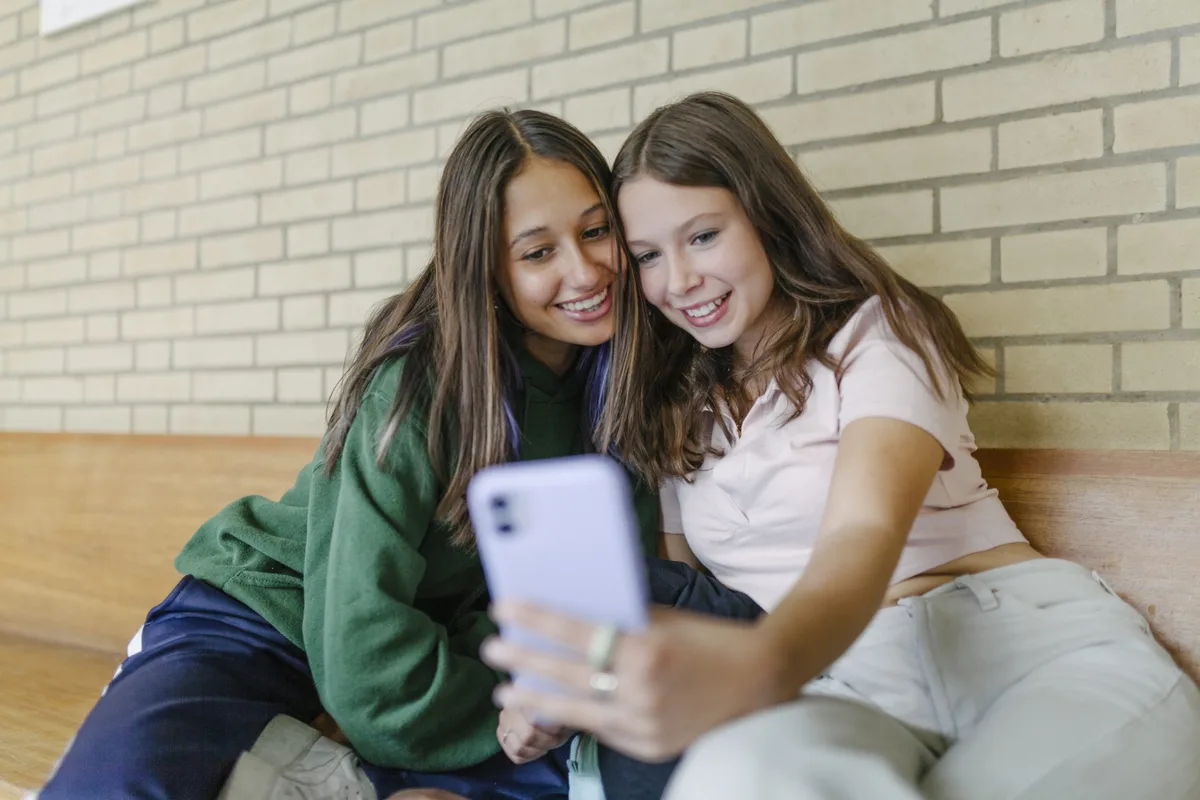
Young people develop and discover their identity and self-perception during puberty. During this time, their body image is significantly influenced by comparisons with role models. Confirmation and approval within their peer group become increasingly important.
Social media plays an important role in this process today. This is where young people present themselves and experiment with possible identities. This is where they get the feedback that is so important to them. Sometimes appreciative, sometimes not. And this is where they find idols they can look up to.
Children and young people need to be aware that when they are online, they are usually comparing themselves to people who have put a lot of effort into presenting an idealised image of themselves.
However, the self-promotion of idols, i.e. influencers, is a billion-pound business. Some role models are therefore questionable. Many young people feel the pressure to compare themselves with people whose job is self-optimisation, often supported by image editing, filters and AI. It is almost impossible to even begin to keep up with them.
When role models are unattainable, this can often have a negative impact on young people, especially when combined with critical feedback on their own efforts. However, recent research shows that young people with stable self-esteem are better able to deal with the pressure to compare themselves to others and critical reactions. For parents, this means that young people who are already confident when they enter the comparison mode during puberty are better able to deal with negative feedback.
Exposing the false pretence
Parents know their children's talents and should support their self-esteem with positive, specific feedback and praise. Focusing on strengths rather than weaknesses can make a decisive difference later on.
At the same time, parents should try to promote media literacy in their children from an early age. Children and young people need to be aware that when they are online, they are usually comparing themselves to people who have put a lot of effort into presenting themselves in the best possible light. And that this comparison will always be unfair. Young people should generally treat feedback on their own posts with great caution. Negative comments in particular often say more about the sender than about the person being evaluated.
Such approaches can be practised together in a playful way. Together with your child, pick out a supposed idol and look at their individual posts. Search together for anything that seems fake or implausible. These are often moments when you can have a good laugh and realise that behind the seemingly perfect artificial personas are just normal people.


