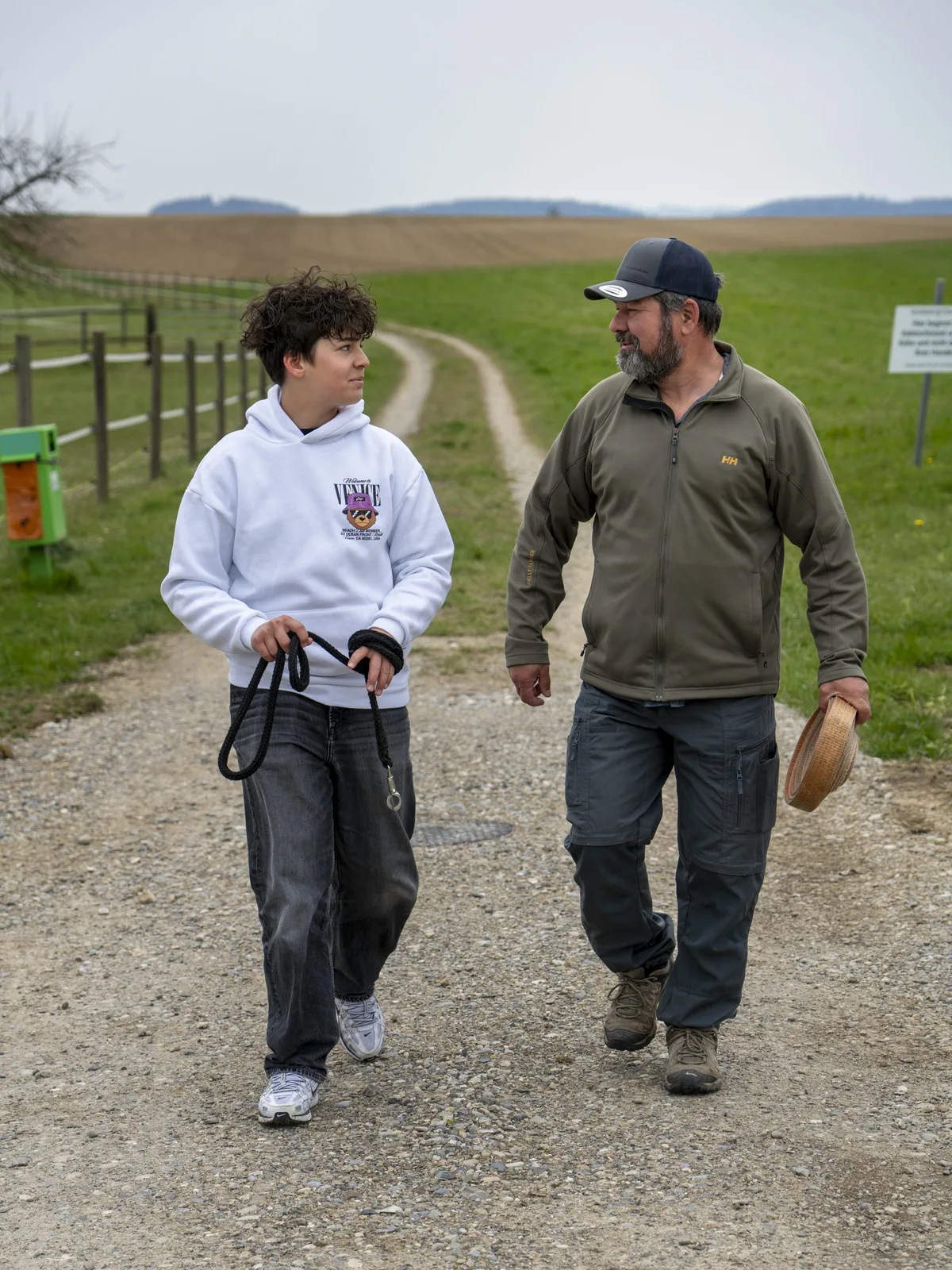
Corina Schäfer, 45, a medical practice assistant and trainee kinesiologist, lives in Oerlingen, Zurich, with her husband Olaf, 50, a heating engineer, and their children Mia, 15, and Nils, 13.
Since our children have reached their teens, everyday life as parents has changed for my husband and me . We still need to set boundaries for our children, even at this age . But for me, being an authority figure doesn't mean acting in an authoritarian or punitive manner.
It's all about striking the right balance: what can our teenagers manage on their own, what do they want and need to decide for themselves – and where do they still need us as parents? This isn't always easy, especially during adolescence. Emotions play a big part , the brain isn't fully developed yet, and on top of that there are all the hormonal fluctuations. That's when they need our support.
The media is a major issue for us . These days, it generally poses a significant challenge for young people. So much of life is digital now – both at school and in their free time. As a result, mobile phones are always with them.
We have a rule that mobile phones aren't kept in the bedroom at night, but have to be handed in by 10 pm. Otherwise, there's too great a risk that they'll be left on various platforms for hours on end without anyone noticing. It's important to us that our minds can switch off for a while. At the same time, we know that the digital world is simply part of life today and we can't fundamentally change that. It works quite well with Nils, our 13-year-old, but with Mia it's more difficult to enforce because of her age. We just have to put up with the fact that she doesn't always like it.
Clear rules for going out
Another example is how we handle going out. We're generally open-minded: Mia is allowed to go out at the weekend, and as she's had a boyfriend for a while now, she's generally allowed to stay over at his place. At the same time, we've set clear boundaries.
The children should know that they can come to us, even if something has gone wrong.
There are no sleepovers during the week, and we've also agreed on times when she needs to be home or, at the very latest, at his place. Of course, we can't always keep an eye on things, nor do we want to. Mutual trust is important to us. We want the children to know that they can come to us, even if something has gone wrong. Our attitude is: we were young once ourselves and wanted to test boundaries. Our teenagers need to have their own experiences, but they also need parents who provide them with a framework.
Olaf and I talk a lot and make a point of setting aside time for it. It's very important to us, as parents, to be on the same page. If we have different views, we discuss them and find a compromise that we can both stand behind.
In conversations like these, we look back on our own upbringing and ask ourselves: what did we like, and what didn't we like? Then we decide what works best for our family situation today. It doesn't really matter what others do – it has to feel right for us.