«Mum?» a voice whispers across the room. I wake up, squinting, and try to get my bearings. As my ten-year-old daughter Stella carries on talking, it dawns on me: I'm lying on a futon in Osaka, Japan. And it's 2.30 in the morning.
The jet lag finally caught up with us on the second night. We spend an hour and a half discussing what we want to do over the next few days. I'd actually just like to sleep, but I pull myself together: I can sense my younger daughter's excitement and how our late-night planning is calming her down. Her fourteen-year-old sister, Zoe, has her own room – she's simply sleeping off the jet lag.
Zoe – a cosplay fan, matcha lover and devotee of Japanese fashion – is the reason why we're spending the night 14,000 kilometres away from home. «Mum, I'd love to see the cherry blossoms in Japan. Can we fly there sometime?» Zoe had asked me many months ago.
My heart immediately leapt with excitement. Discovering the world, getting to know other cultures, having adventures – that's my passion. I'd been so looking forward to passing on this enthusiasm to my daughters. So, last autumn, I scrolled through the school holiday dates and cherry blossom season dates. And lo and behold: the Easter holidays in northern Germany coincided exactly with the 2026 cherry blossom season in Japan. And so, «sometime» quickly turned into «this year».
Different daughters, different needs
Stella isn't particularly keen on any of the things that draw Zoe to Japan – especially cosplay costumes and coquette fashion with a «kawaii» aesthetic, i.e. very feminine clothing made from delicate fabrics, featuring lots of bows and pastel colours. My daughters are completely different – in character, in style, and in terms of their interests.
This is something that always presents a challenge when we're travelling: Stella loves art, culture and hiking in the mountains. She can't stand bustling cities and shopping. For Zoe, on the other hand, Japanese shopping centres are heaven on earth, whilst she really doesn't like stuffy museums at all. And the word «hiking» sends shivers down her spine. Fortunately, they're both willing to compromise.
I'm proud that my daughters can tell when I, as their mum, need a break to catch my breath, and then step in without a second thought.
That said, Zoe has a clear advantage this time: our route takes us only through Japanese cities – Osaka, Tokyo, Kyoto and, finally, back to Osaka. It wouldn't be a typical holiday. More like an adventure involving wheeled suitcases, metro maps and moments to catch our breath.
Dive into the pink adventure
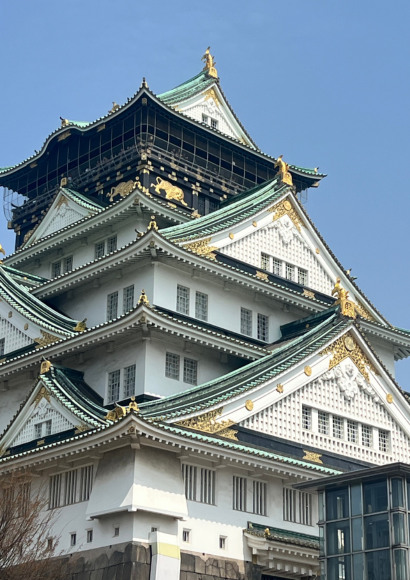
Our first accommodation is not far from Osaka Castle. After a short metro ride, we emerge from the cool underground into sunshine, warm air and a sea of white and pink blossoms. Under the cherry trees in the park surrounding the castle, families and groups of friends are having picnics on blue tarpaulins.
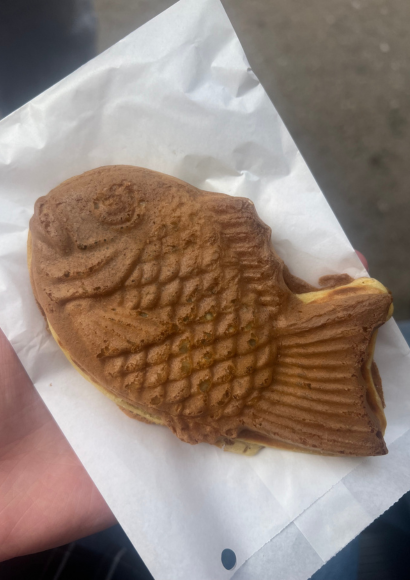
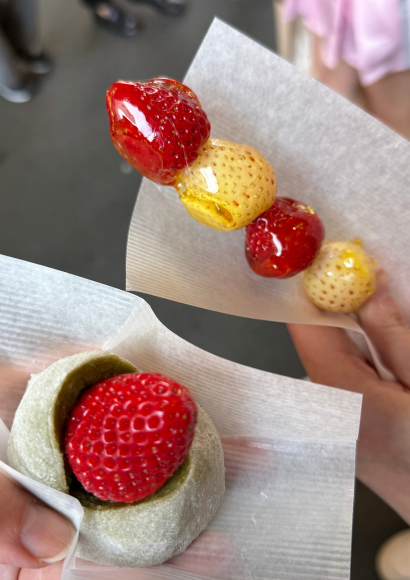
We treat ourselves to soufflé pancakes with sugar-sweet bean paste, mixed with pickled cherry blossom leaves. Osaka is famous for many of Japan's most popular dishes. We soon realise that vegetarian options are few and far between. Eating a meat-free or even vegan diet is surprisingly challenging in this island nation. Sometimes the vegetarian meal we've ordered arrives with a chicken topping; sometimes caviar is hidden in the mushroom pasta; and sometimes the «noodles with cheese» from the 7-Eleven convenience store turn out to be pasta with gravy. All too often, we have to rely on cheese on toast and desserts to get us through the day.
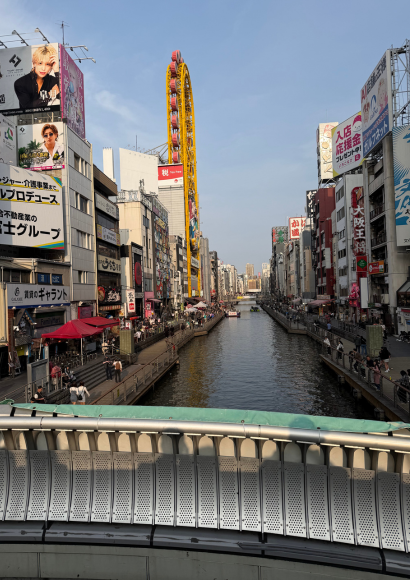
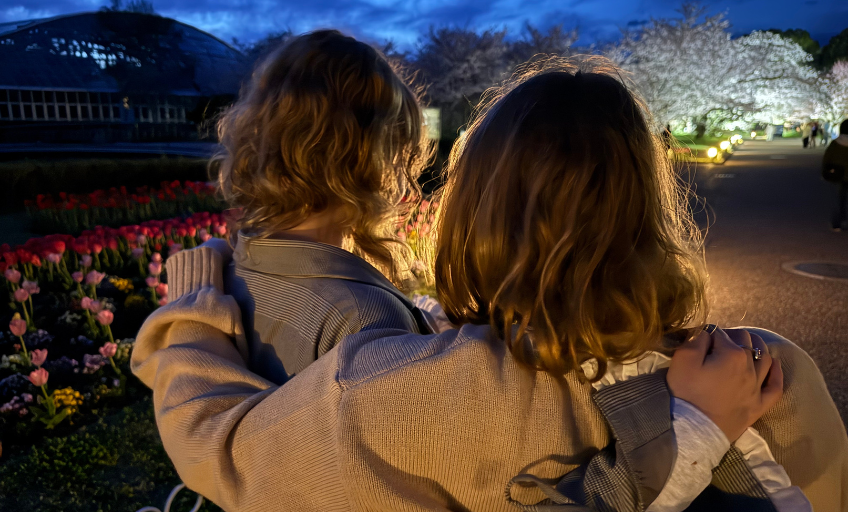
When the children lead us to our destination
What has pleasantly surprised us is that the country is easy to travel around with children. At railway stations, metro stations and bus stops, many signs are also in English. Google Maps usually shows you the right exit or guides you to the correct platform. That's worth its weight in gold when you're standing in a station that feels like a city in its own right, laden with suitcases, rucksacks and children.
Even so, I often find the situations at train stations overwhelming. The what feels like a thousand display boards are too much for me. But then another lovely surprise unfolds: my daughters occasionally take the reins and guide us safely to our destination. They've been making their own way to school since Year 1 – finding their way around comes naturally to them. Both of them are calmer, more grounded and less nervous than I am. I'm proud and grateful that my daughters can sense when I, as their mum, need a break to catch my breath, and then step in as a matter of course.
It's often the little things that inspire us, rather than the typical tourist attractions that are all the rage on Instagram and TikTok.
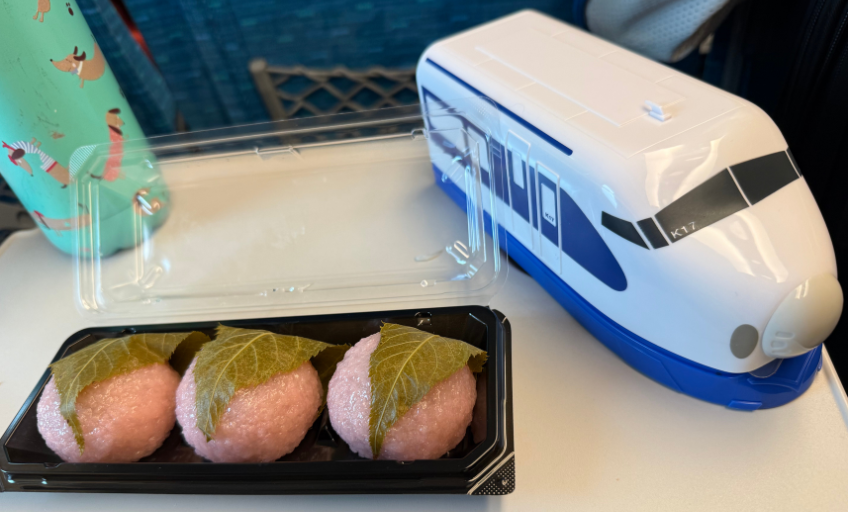
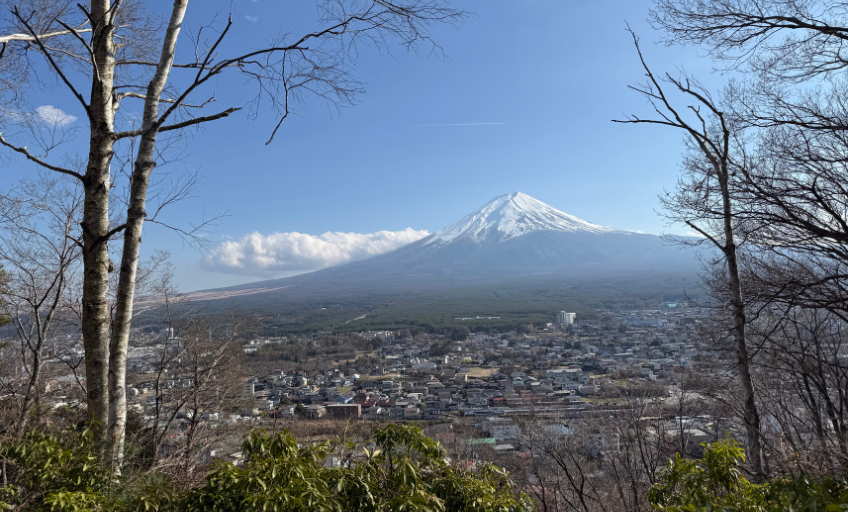
Even before we continue our journey to Tokyo, Zoe takes the lead at the station. From Osaka, the Shinkansen takes us to Japan's capital in two and a half hours. The train is clean, punctual and quiet. At some point, Mount Fuji passes by outside the window. Thick storm clouds block our view of the volcano, but we resolve to admire it whilst the sun is still shining.
On arriving in Tokyo, we're initially overwhelmed by the hustle and bustle at the station. There's so much of everything: traffic, people, signs, different levels. For Stella, who isn't particularly fond of bustling cities, moments like these are challenging. She needs breaks, something to eat and sometimes just a quiet place. Zoe, on the other hand, soaks up the sights of the teeming crowds and weaves her way through cramped shopping centres with great delight.
The pedal boat adventure on Lake Kawaguchi
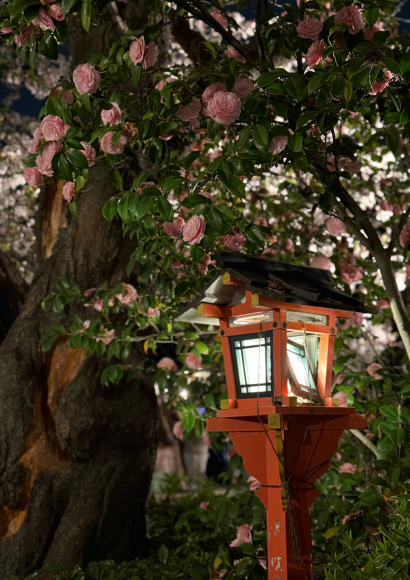
To escape the hustle and bustle, we visit parks and gardens. In Shinjuku Gyoen National Garden in Tokyo, we stroll along avenues lined with cherry blossoms. Sakura, the Japanese cherry blossom, also accompanies us on our one-day coach trip to Mount Fuji. Time and again on the journey, we spot blossoming trees that paint little splashes of colour into the world.
At Lake Kawaguchi, we hire a swan-shaped pedal boat and pedal across the water with a view of the mountain – in glorious sunshine, no less. It's silly, exhausting and, for that very reason, one of those outings we'll keep laughing about long afterwards. We pedal and pedal, whilst my daughters keep squabbling over who gets to steer. I try to mediate and, bang: the two of them team up against Mum. Family time at its best: bickering, getting on each other's nerves and then feeling deeply connected again.
As we sail into the harbour, I can already picture us crashing into the very first ledge. My daughters, on the other hand, show childlike composure and steer our «swan» perfectly up to the jetty. At moments like this, we realise that even though we sometimes get on each other's nerves, as a team we usually work brilliantly together.
It takes time to take all these impressions in. Otherwise, everyone ends up feeling drained and annoyed.
What helps us slow down
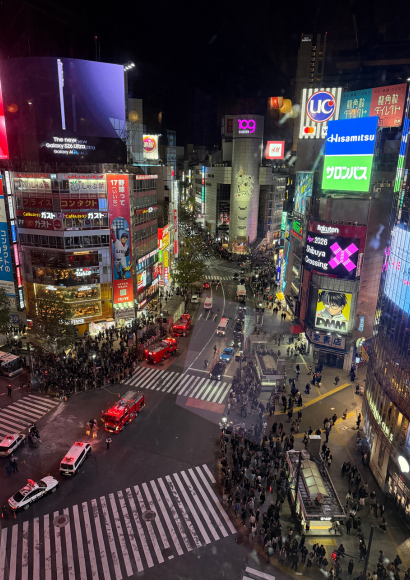
Tokyo, on the other hand, isn't being kind to us weather-wise – it's stormy and raining almost every day. But just in time for our visit to the famous Shibuya Crossing, the clouds clear. People, advertising hoardings, sounds: it's all impressive, though less overwhelming than expected. At the end of the day, it's just a crossroads. Perhaps because some things that are hyped up on Instagram or TikTok aren't actually that spectacular when you're there in person. We realise that it's often the little things that delight us, and rarely the typical tourist attractions.
Or perhaps it's because Japan remains orderly even in such crowded places. Time and again, we notice that whilst the cities are full of people, they're rarely noisy. It's not the noise that causes sensory overload here, but the sheer volume of impressions. Japan works well as a family holiday destination if you don't try to pack every day to the brim. Zoe has to remind me of this from time to time. She makes sure her younger sister gets a half-day's break now and then. Slowing down is important when travelling with children and teenagers. It takes time to take in all the new experiences. Otherwise, everyone ends up exhausted and irritable.
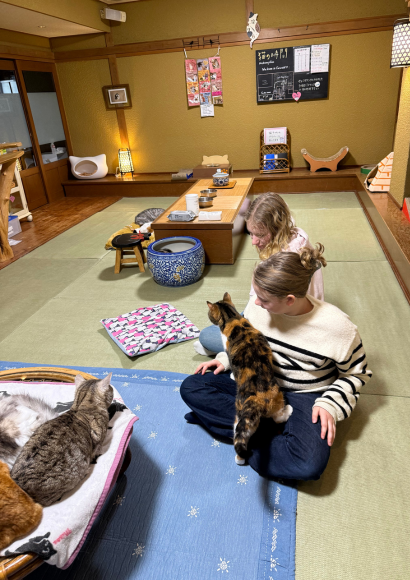
Sometimes all it takes is a temple, a park or a visit to a cat café. This is particularly true in Kyoto. Japan's former capital captivates visitors with its temples, shrines and traditional alleyways. We visit the Golden Temple, walk through the red gates of the Fushimi Inari-Taisha Shrine and marvel at the bamboo forest. Kyoto feels more peaceful than Osaka and Tokyo. What's more, we finally find more vegetarian and vegan restaurants here.
Our tips
Zoe's tip:
If you're into Japanese fashion, you should head to the Laforet Harajuku shopping centre in Tokyo or the EST Osaka. They're well worth a visit – much more so than the much-hyped Shibuya109.
Stella's tip:
Focus on doing and discovering things in Japan that you can't find back home.
Our book recommendations:
- «Japan Essentials: Everything you need to know for your trip» by Tobias Lang, aka Mr Nippon
- «Lonely Planet Children's Travel Guide: Japan – Let's Set Off on an Adventure!»
- «Lonely Planet Travel Guide to Japan: Go your own way and discover something unique.»
Why Japanese people hardly speak any English
We also get the impression that more English is spoken here. That's something else that surprises us: on our travels, we hardly ever come across Japanese people who communicate with us in English . Of course, we know the most important basic terms in Japanese, and these days, thanks to translation apps on our mobiles, it's no problem to make ourselves understood in any language.
Nevertheless, we find it striking that even young people in shops and restaurants speak little or no English. Back home, we do some research: English lessons in Japanese schools tend to focus on memorising vocabulary, rather than on applying and practising conversation in English. Furthermore, the island nation was cut off from the rest of the world for a long time; the proportion of foreigners in Japan is relatively low. Consequently, there is no pressure to master and use the English language.
Children tend to remember their travels through feelings, smells, little rituals and funny moments.
Toy balls and sacred deer: what children and teenagers love
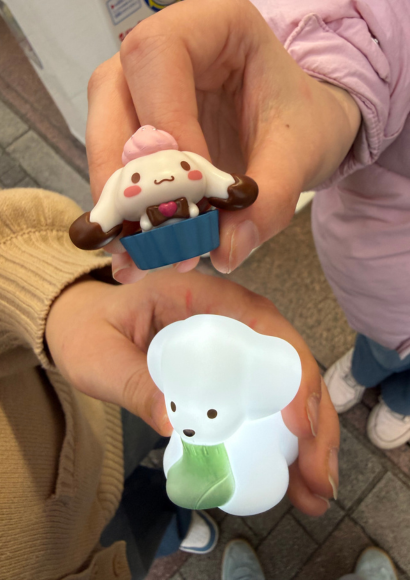
As well as vegetarian food and more English, we find something else: gachapon machines. For children and teenagers, they're almost as fascinating as the major tourist attractions. The machines contain little surprise capsules with figurines or miniatures inside. You put coins in, turn the handle, and never know exactly which figurine will come out.
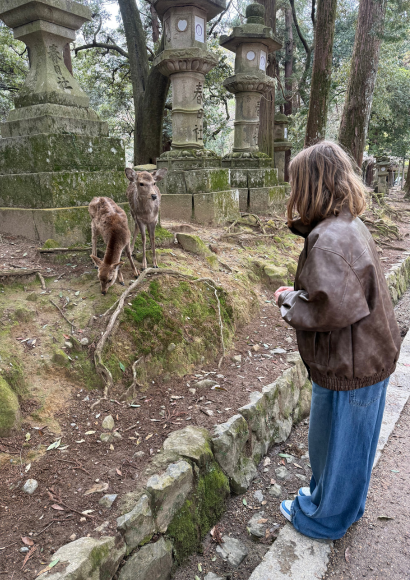
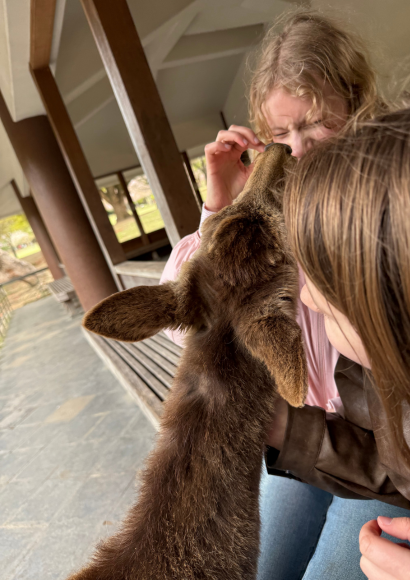
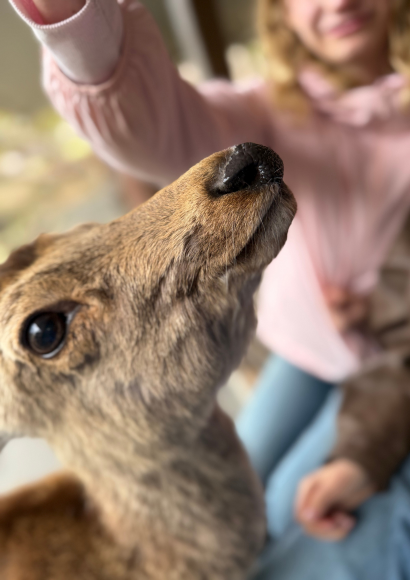
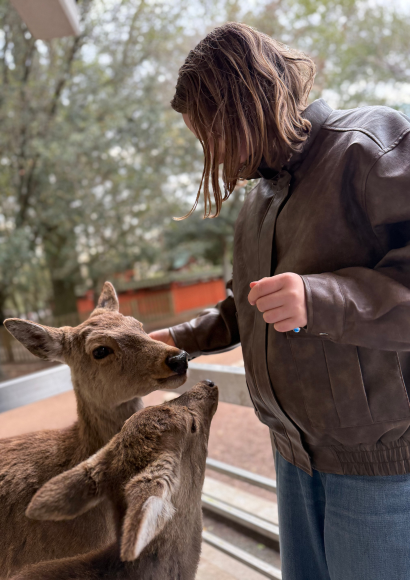
Our trip to Nara was just as unforgettable. The park is home to free-roaming sika deer, which are considered sacred and are fed by many visitors. The animals have learnt that bowing increases their chances of getting a tasty snack. At first, this seems enchanting, but it can quickly become hectic. Anyone holding crackers is immediately spotted and surrounded. Our rule is: hands up, keep walking calmly and don't scream.
For my daughters, it's ultimately these moments that stick in their minds: the late-night chats about jet lag, the swan-shaped pedal boat at Mount Fuji, the gachapon machines, the deer. Of course, we also remember the temples, shrines and cherry blossoms. But children often remember trips more through feelings, smells, little rituals and funny moments.
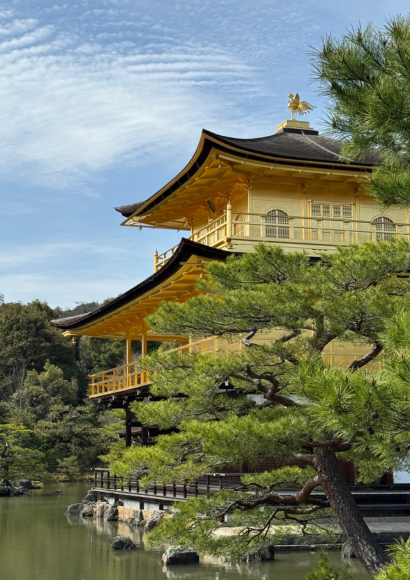
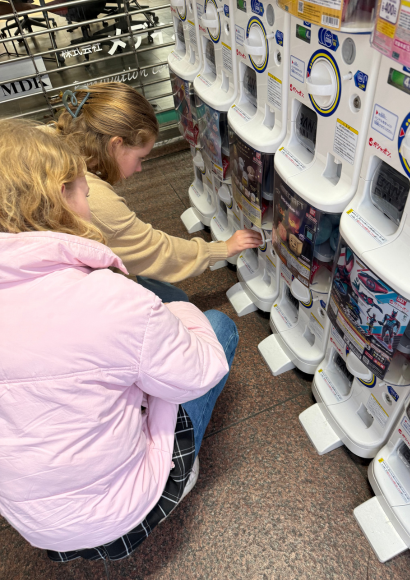
No chance to relax, not sustainable, and yet absolutely beautiful
After fourteen days, we bid farewell to a country that has delighted, surprised and, at times, overwhelmed us. Visiting Japan with children is not your typical relaxing holiday. The journey there is long, the cities are vast, and the days fill up quickly.
Air travel is also problematic from a sustainability perspective. As a family, you have to decide how to deal with this. We try to travel to neighbouring countries by car or train as often as possible and explore Europe, so as not to contribute to the climate crisis with long-haul flights every year. But for those who, like us, love getting to know other cultures, there's no getting round long-distance travel – at least every now and then.
Our verdict: Japan is clean, safe, well-organised and surprisingly easy to travel around. This East Asian country is well worth a visit as a family holiday destination, provided you're prepared to take the children's pace seriously. If you allow for breaks and are open to little everyday discoveries, you can get a great deal out of the trip as a family. Above all, the trip showed us that, despite all our differences, we get on well together. And we've created memories that will stay in our hearts forever.
Our tips
Planning + Organisation
- Best time to visit: Spring and autumn are popular, but also more expensive. Summer and winter can also be appealing.
- Flight planning: It's worth booking early. Being flexible about your departure airport and stopovers can save you money. Tip: Fill in the entry form online in advance to save time when you arrive.
- Time: Japan is seven hours ahead of Central Europe (during summer time) or eight hours ahead. Jet lag is more pronounced on the flight from Europe to Japan than on the return journey.
- Itinerary: For a two-week trip, a manageable itinerary is ideal. Osaka, Tokyo and Kyoto can be easily combined; if you're looking for more nature, you should include fewer cities.
- Transport: IC cards are well worth itfor travelling by metro, S-Bahn and bus. You can buy them at airports and railway stations, and some can be purchased online. Tip: Children up to the age of 11 pay only half price for journeys – however, you must buy the card at the ticket office and show the child's ID as proof.
- Accommodation: Apartments have the advantage that families can cook for themselves. For us, that was a lifesaver.
Plan your budget realistically
- Japan isn't a cheap long-haul destination, but it's easy to budget for. Our biggest fixed costs were the flights, at around 1,000 euros per person, and accommodation, totalling around 2,000 euros for four Airbnb stays. On top of that, there were local transport, the Shinkansen, day trips, admission fees, food and small everyday expenses.
What we'd do differently next time
- We'd plan fewer stops and build in more rest days. A trip with children doesn't get any better just by ticking off more things on the list. It gets better when everyone has enough energy to stay curious.