The queue appears out of nowhere and stretches across the playground. The 69 pupils from Zug Day School line up neatly in order. Just like a flash mob: at a secret signal, chaos breaks out. Children who were previously running about haphazardly suddenly follow a choreographed routine.
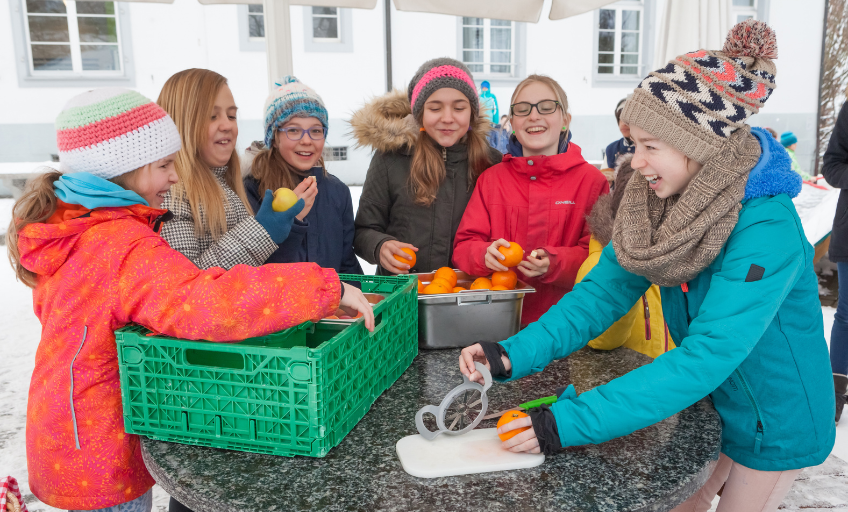
However, the performance taking place between the climbing frame and the slide isn't about acrobatics or a song. No, it's something much more down-to-earth: it's all about hard cheese, slices of bread and small organic apples.
There's a bit of a stir at the front of the queue; the children are slowly moving forward. The whole thing is going smoothly, without any grumbling or jostling. Well, it's not entirely without a bit of that, but a school playground isn't a barracks courtyard, is it? At the front, a teacher is handing out today's morning snack. The cheese comes from a neighbouring farm, as do the stored apples. The baker delivered the rye bread before school even started. It doesn't get any fresher than this.
A symbolic morning ritual
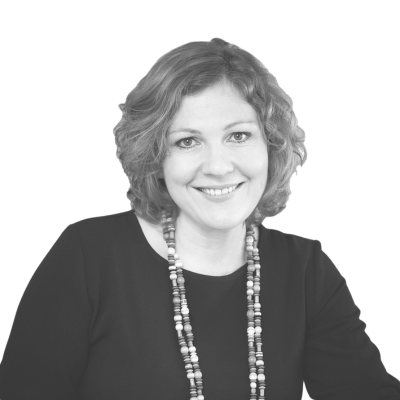
The girls and boys seem to particularly enjoy it. Many of them queue up for a second helping after just a few minutes. «As the children spend the whole day at school, it's important to us that everyone has access to a healthy, nutritious morning snack – whether they eat it or not is then up to them,» says headteacher Marianne Moser, taking a cheerful bite out of her apple.
In countries such as France, Italy, the United Kingdom and Sweden, all-day schools have long been the norm.
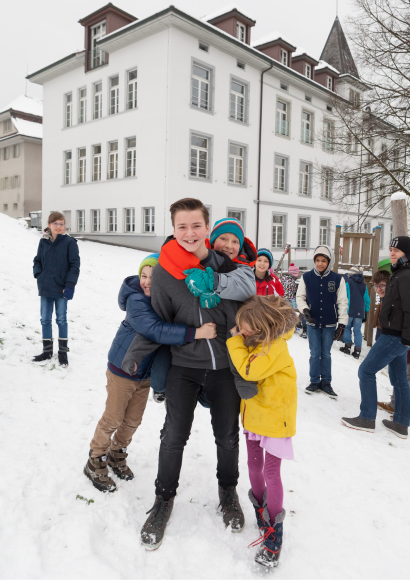
The morning ritual, which the pupils follow as a matter of course, is highly symbolic: at the Zug Day School, the children, teachers and care staff form a community that extends far beyond the classroom. There may well be a few lone wolves here too, but the team players are clearly in the majority. And it has been that way for 21 years.
A shift in thinking is taking place
Switzerland is not exactly a pioneer when it comes to all-day schools. In countries such as France, Italy, the UK and Sweden, however, all-day schools are the norm. German-speaking countries, particularly Switzerland, are struggling to come to terms with the idea of a school where children are not only taught but also receive proper supervision during their free time.
What is practised successfully in Zug is regarded in other parts of Switzerland as an exotic, even downright unnecessary model. At least from the perspective of conservative, traditionalist forces, who believe that childcare is primarily a private matter for parents – and usually the main responsibility of the mother, who is best placed to do it. Yet even amongst the sceptics, a shift in thinking is gradually taking place.
The expansion of supplementary childcare provision is now under way in most cantons. Things are already looking quite good as regards nursery schools, and progress is also being made in the school sector. Many towns and local authorities now have additional services to offer: a newly opened lunchtime club here, homework support there. When it comes to defining childcare provision, everyone seems to be doing their own thing.
There is a lack of standards applicable nationwide
Although there are many arguments in favour of the distinction between «traditional schools», «schools with after-school care» and «all-day schools» (see the glossary in the box), there is some confusion over the terminology.
The journalist Ursula Rellstab, co-founder and long-standing supporter of the Swiss all-day school movement, has counted them up. She has identified fifteen different terms that are used more or less synonymously with «all-day school»: day-care school, integrated all-day school, partially integrated all-day school and integrated day-care facilities, to name but a few.
She also notes with some disillusionment that even cantons which use the same terms do not by any means mean the same thing. Conclusion: whilst there are many good approaches to the issue of «all-day schools», there is a lack of nationally applicable standards. This is due to our federalist education system, but that is not the only reason.
Clear your head again before lunch
In 1995, the town of Zug responded to a citizens’ initiative in which parents had called for modern childcare options for primary school children, and began looking for premises in order to open a day school. An old school building situated above Zug's old town proved to be ideal.
The number of classrooms was reduced, and the rooms that became available were converted into a kitchen and a dining hall. As the pupils were to remain on the school grounds from morning until evening, various quiet areas were also created.
As a general rule, teachers’ time is divided as follows: two-thirds on teaching, one-third on supervision.
Morning lessons have just finished at the day school. The children are streaming back outside onto the playground. Time to clear their heads and stretch their legs, please! The headteacher explains: «We've found that lunchtime is much calmer if everyone has had a chance to let off steam beforehand.» It's a sort of simulation of the journey to school.
Just before half past twelve, the pupils are seated at the tables alongside their teachers and a few mums and dads, who, by arrangement, join them for lunch and help look after the children several times a month. Lunch is currently being prepared in the kitchen. Today, they'll start with slices of cucumber and nuts to nibble on. Then there's salad.
The atmosphere in the packed dining room is very civilised
When the kitchen crew – consisting of the head chef, the caretaker and his wife, a teacher and the parents in question – serve the main course, some of the children pull long faces. Cannelloni stuffed with spinach – they don't like that.
Fortunately, there's a list hanging on the wall where everyone is allowed to list two ingredients they'd rather give a miss. Unsurprisingly, alongside spinach, courgettes and mushrooms are also low on the list. In practical terms, this means you don't even have to try them. A cheeky Year 2 pupil announces that her entry no longer matters, and, with death-defying courage, shoves a mouthful of spinach pasta into her mouth. Silence. Everyone stares at her, spellbound.
The girl chews and chews – then swallows. Only to help herself to the next portion straight away. Cheers ring out around the table. It really can be that simple. Others, too, spontaneously overcome their spinach allergy. Another thing that stands out: although the dining room is full, everyone is surprisingly well-behaved. Everyone is sitting properly in their seats and, by and large, sticking to standard table manners. Perhaps this has something to do with the fact that the adults are right in the thick of things.
Close cooperation between teaching staff and the support team
After lunch, everyone has about an hour's free time. They build Lego spaceships, knock down Kapla towers or do their schoolwork. Then it's back to the classrooms. The 69 pupils are taught by nine teachers in three combined classes. The Year 1 pupils are grouped with the Year 2s, the Year 3s with the Year 4s, and the Year 5s with the Year 6s. In between, there are regular sessions dedicated to each individual year group.
Two teachers are responsible for each combined class. The teaching team works alongside a special needs teacher and two support staff members with additional training in education, who are also responsible for catering. Should any problems or conflicts arise, a school social worker can also be involved.
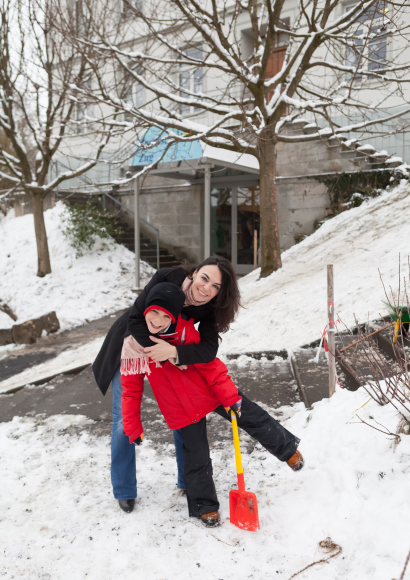
«Of course, we're no exception,» says the headteacher. «Precisely because the children are at school from morning till night and there's hardly any chance of them avoiding one another, the team faces far greater challenges. We can't just let problems fester; we have to tackle them promptly.»
Outside of teaching hours, all team members are allocated to supervision duties in accordance with a rota. For teaching staff, the general rule is: two-thirds teaching, one-third supervision.
There is still a great deal of resistance
Incidentally, the school curriculum follows the standard syllabus. The children swot up on their times tables and comma rules just as much as all other pupils in Switzerland. However, at day schools, homework is completed during school hours.
At 4 pm, the bell rings one last time; the official part of the day is now over, and some children go home. Those who stay for the evening programme take part in various leisure activities after their afternoon snack, or get on with their own ideas. «Some need a structured programme, whilst others need more freedom and quiet breaks to be able to switch off,» says Marianne Moser. The day school is a bit like a boarding school – just without the beds.
Day pupils perform better in maths and language than boarding pupils.
According to a study on out-of-school care commissioned by the Federal Commission for Family Affairs, the findings of which were published last November, there are only a handful of schools nationwide that implement the all-day school model as consistently as the Zug Day School. In rural areas in particular, there is considerable resistance to educational institutions offering continuous and comprehensive care for all children.
Yet hardly anyone disputes any longer that the traditional division of roles – whereby Dad brings in the money whilst Mum looks after the children – is crumbling. Until now, it was mainly mothers who, upon the birth of their children, put their careers on hold for an average of ten years or more in order to remain, as it were, on standby at home.
More and more mothers do not want part-time work
More and more well-educated women are no longer content with part-time work and want to advance their careers even whilst raising a family. This is a development that, in principle, benefits the Swiss economy. Nevertheless, many people in this country remain convinced that it is only the loving influence of mothers – particularly evident during the one-and-a-half-hour lunch break between school lessons – that ensures children grow up to be decent adults.
This assessment may be, at least in part, outdated. Initial findings from the long-term «Educare» study, conducted at the University of Bern – which also examines how the combination of lessons and all-day care affects children – are striking: according to Educare, pupils at all-day schools perform better in maths and languages than their peers at traditional schools. And this is despite the same number of lessons.
The average annual fee in Zug is 2,600 francs per child and is not means-tested.
The moment when what day-school pupils have learnt is firmly consolidated must occur outside the classroom. Another finding is that the higher the quality of care at day schools, the greater the benefits for girls and boys in social and emotional terms. These findings are consistent with those of comparable studies carried out abroad.
Costs of day school in Zug
It may well be that the thought process going on in the minds of mothers and fathers is more advanced than we thought. Whenever a day school opens anywhere in the country – as was recently the case in Uster in the canton of Zurich – there is a huge rush for places. This comes as no surprise to a day school expert like Marianne Moser.
In Zug, there are regularly more applications than there are places available. The average annual fee for childcare and meals on school days, at around 2,600 Swiss francs per child, is not means-tested. And – compared with the rates charged by many nurseries – it is affordable. Families who are unable to cover this amount easily can apply for a reduction.
During the school holidays, the day school – like all other state educational institutions – closes its doors. The 13 weeks of school holidays are generally offset by only 5 or 6 weeks of paid annual leave for employees. All in all, this leaves 7 to 8 weeks for which families must organise and pay for alternative arrangements.
How much does a day school cost?
- Fees vary from school to school. Unlike at the Zug day school described here, parental contributions at most state day schools in Switzerland are based on income and family size. The amount parents are required to contribute can be found using the so-called fee or contribution calculators on the websites of the schools or of the relevant town or canton.
- You can find further information here.
Who gets a place?
As siblings are given priority for admission to the day school, some of those interested have to be turned away. There is no waiting list in the strict sense of the word, but rather a list of those expressing an interest. The likelihood of a child leaving the school, thereby freeing up a place, is rather low.
As a rule, families who have received a rejection letter have to look for another solution. As the city of Zug has a well-developed network of after-school childcare facilities and the surrounding area has a number of private schools, alternatives can be found.
«We ask families to include a letter of motivation with their application,» explains the headteacher. Many parents who express an interest simply like the idea of a cross-curricular community. Some mums and dads have demanding jobs and want their children to be well looked after during the day. The model also offers advantages for single parents.
«Difficult» cases are also welcome
The selection process for prospective pupils is complex and is carried out by the school board in collaboration with the headteacher. They decide jointly who is offered a place. It is certainly not the case that «difficult» cases are screened out at an early stage.
Given the unusually peaceful, indeed almost idyllic, atmosphere at this day school, such a suspicion might seem plausible. But the opposite is true: «Precisely because we have achieved such good results in integration thanks to the intensive and consistent level of support we provide, we deliberately also accept girls and boys who require more intensive educational support,» notes Marianne Moser.
«We attach great importance to ensuring a good mix in the classes.» In other words, children from all parts of the city and from different backgrounds bring their own strengths to the table. Together, they shape their everyday school life in such a way that everyone can thrive and benefit from one another as much as possible.
Here are two more interesting figures: the children's parents and grandparents come from 23 different countries. If you add up all the languages the pupils speak, the total comes to 17.
It is also evident on another level that interest in all-day schools has increased. Many teachers who were originally only introduced to the model as part of a work placement or supply teaching role say they would like to work at an all-day school in the future. And this is despite the fact that, before their placement at an all-day school, these same teachers often felt that an all-day school was not really for them.
Glossary
- Traditional school: Over the past few decades, the vast majority of Swiss children have attended this type of school, where lessons are held exclusively in the local neighbourhood or village. The children have lunch at home and only return to the school grounds for their afternoon lessons.
- Schools with day-care facilities: Here, pupils not only receive lessons, but can also attend early-morning care and/or the attached lunchtime programme, make use of homework support, or take part in various leisure courses. As a rule, the school is responsible for all educational matters, the attached after-school care centre for extracurricular activities, and the local education authority for the leisure courses on offer. Each family can put together the programme that best suits their needs.
- All-day school: In fully-fledged all-day schools, all children attend lessons and make use of the childcare provision. The teaching and childcare staff form a team and implement a holistic educational approach. Pupils are taught and looked after on weekdays during core hours from 8 am to 4 pm. On Wednesday afternoons, families can decide for themselves whether to send their children. All-day schools often offer a wide range of activities that go beyond the core hours. Attendance at an all-day school is voluntary. This means that parents must actively express their interest in securing a place.