Mr Marks, you say: «Shame is the defining emotion of our time. And we act as though it doesn't even exist.» You'll have to explain that.
In fact, shame plays an immensely important role. It is one of the key driving forces behind learning and personal growth – particularly in education. That is why it would be good if we dealt with it in a conscious way.
For centuries , shaming was a common method of discipline. Children were humiliated and sent to stand in the corner: «Shame on you!» In recent decades, however, we have drifted from this tradition of shaming as a form of discipline to the exact opposite: «You've got nothing to be ashamed of!»
And is that a bad thing?
Yes, because it hinders development and learning. May I tell you a story?
You're welcome!
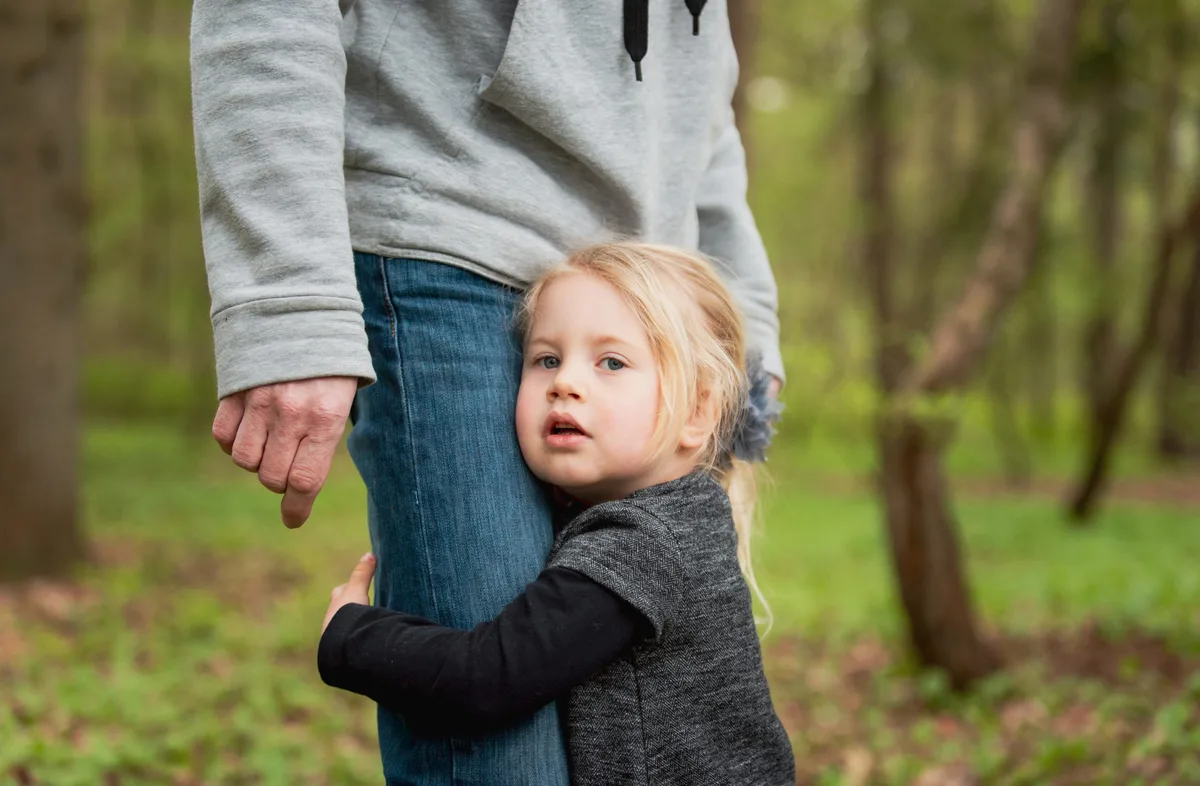
One of the participants in my seminars visited his son's family with his wife. Over the course of the weekend, their little grandson hit his grandmother. She said: «Tobias, stop it, you're hurting me!» Little Tobias felt ashamed and snuggled up under his grandfather's arm. His grandfather then said: «Tobias, there's no need to be ashamed!» Now I ask you: would we treat a grieving child in the same way?
Probably not.
Exactly. Thanks to the Swiss bereavement researcher Elisabeth Kübler-Ross, we now know that grief is painful, but that it is simply part of life and also serves a purpose: it helps us to come to terms with the death and prepare ourselves for new life. Since then, many hospitals and hospices have been offering grief counselling and support.
Just as there is grief counselling, children need support in dealing with shame – from their parents and all their caregivers.
The situation is similar with shame: it is painful, yet it too serves a purpose. If we play down Tobias's shame («You've got nothing to be ashamed of!»), we rob him of the impetus for moral development. For shame shows that we can, as it were, look at ourselves from the outside, perceive the gaze of others and recognise that we have not lived up to their standards: I am a human being, I have made a mistake and I can change.
What actually happened in that story?
Presumably, Grandad couldn't bear the situation. If he were aware of his own shame, he might adopt an attitude that I would describe as follows: «Tobias, I know what it's like to feel ashamed, I know how that feels. That's why I take your shame seriously and will neither trivialise nor mock it.» Just as there is grief counselling, children need support in dealing with shame – from parents and all their caregivers.

What does this require of parents?
That they are aware of their own shame and do not suppress it. For, as a society, we have largely done away with the awareness of shame. Today, it is the Cinderella of emotions, and we go to great lengths to avoid having to feel our own shame – and the pain that goes with it.
Entire industries are dedicated to erasing our shame and making us believe that all we need is this or that cream, cosmetic surgery or certain status symbols. However, if, as a mother or father, I do not allow myself to feel shame and am not aware of my own shame, I cannot offer this attitude to my children either.
What exactly is shame?
A very deep emotion which, neurophysiologically speaking , is localised in the same region of the brain as fear and pain. Intense shame can be experienced as a form of fear for one's survival. When we feel shame, this can manifest itself in physical reactions: we tremble, turn pale or red, our mouths go dry, and we want the ground to swallow us up.
I distinguish between four basic forms of shame, each of which stems from the violation of a fundamental human need. The first form is shame caused by disregard. This arises when I am ignored, excluded, treated as if I were invisible, or simply not acknowledged. The second is intimacy shame: when something physically or emotionally intimate – feelings, thoughts, secrets, the body – is unintentionally made public.
The third is shame caused by exclusion – when one fails to live up to the expectations, norms or values of a group, one's family or society («What will others think?»). And the fourth form is moral shame: this is a moral form of shame one feels towards oneself for having acted contrary to one's own values and convictions.
How do these different feelings of shame develop over the years?
The first form of shame begins very early on; here, the gaze is of fundamental importance. From around the middle of the second year of life, intimacy-related shame becomes apparent – that is, what we traditionally understand as shame: the child feels ashamed because something intimate has become visible. From around the age of four or five, the precursors of exclusion-related shame begin to emerge: the child becomes familiar with the norms, prohibitions and rules of their environment and tries to conform to them.
They feel ashamed when they realise they have failed to meet the expectations of the group or their parents. This shame of exclusion comes to the fore during puberty («What do my mates, my peers, think?»). Brain researchers have found that children up to the age of 13 listen most intently to their mother's voice; after that, it is the voices of their friends of the same age. A sense of belonging to the family now takes a back seat.
And what about the pangs of conscience?
This comes to the fore, if at all, during adolescence: the person feels ashamed of themselves and experiences pangs of conscience because they have violated their own need for integrity, because they have betrayed their own values.
If we have been shamed too much, this can lead us to bully other people.
What about the shame caused by disrespect?
This differs from the other forms in that it does not require a specific age to develop. It is evident from birth and continues throughout a person's life. Throughout all these stages, however, parents and teachers act as witnesses and supporters.
I've noticed that, as they get older, there are more and more situations in which my children – they're 16 and 13 – find me, or what I say, embarrassing. What sort of embarrassment is this?
This concerns the interpersonal aspect of shame. It is no longer just about how one views oneself («Oh! I'm naked!» or «I've made this mistake or breached that norm»), but about how others judge one. This vicarious shame can serve to establish boundaries – for example, from one's parents – and help one to discover one's own path and develop one's integrity. This is painful for everyone involved – but it is important.
You criticised earlier that, over the past few decades, we have come to want to shield children from feelings of shame. What makes you say that?
The Swiss school psychologists Fritz Oser and Maria Spychiger have observed that many young teachers today enter the profession with the desire not to embarrass their pupils, and as a result no longer address mistakes or misbehaviour at all. But in doing so, we are leaving children and young people to their own devices.

After all, it is not about sparing someone from shame – but about enduring it. Little Tobias can certainly be expected to cope with the shame triggered when his grandmother says: «Stop it, you're hurting me!» In doing so, his grandmother has indeed pointed out his mistake – but not in a way that causes shame. This would have been the case if, for example, she had told him off. It is therefore a question of pointing out mistakes without causing shame.
What, then, is the difference between shame and humiliation?
Shame is something we experience on our own – for example, when I stand up in front of the class, give the wrong answer and feel ashamed as a result. This is perfectly normal. But if someone then laughs – be it a pupil or a teacher – external humiliation is added to the mix. The insidious thing about this is that if we have been shamed too often, it can lead us to bully other people – people we know cannot defend themselves. To avoid having to feel our own shame, we force others to feel ashamed. In research, we call this a shame defence mechanism. This can lead to bullying.
Could you illustrate this with a specific example?
In a small study, we were able to observe clearly how a pupil, whilst playing football in PE, misplaced a pass, was laughed at by his classmates and, shortly afterwards, brutally kicked a team-mate. He was presumably ashamed of his mistake, and on top of that came the mockery of the others – external shaming. So, out of shame, he resorted to violence. The boy thus channelled his own shame into a different form of behaviour that was less unbearable for him. Better to take it out on others than to feel his own pain.
How might the scene ideally unfold from here?
If the PE teacher were to observe the situation and address the issue, all the pupils could learn: «Mistakes happen, and they are associated with feelings of shame. How can we deal with this in a constructive way?» It is important that the teacher intervenes as soon as the pupil is being laughed at. In reality, however, things usually turn out differently.
Anyone who was laughed at for singing as a child might not sing again for decades.
How so?
As a rule, this learning opportunity is missed because the teacher either doesn't notice it or, whilst observing the scene, fails to understand the drama behind it. For, as far as I can tell, shame is hardly, if at all, part of physical education teacher training. And those who have become PE teachers are generally not the ones who were laughed at as pupils. Yet, in my opinion, it is precisely those who were laughed at who would go on to make good PE teachers.
But back to the case in hand: it may also be that the teacher observes the situation and goes so far as to mock the pupil as well – in other words, the teacher adds further humiliation and ridicule on top of it all. What all the pupils then learn in this lesson is to replace feelings of shame with verbal or physical violence. If this sort of thing happens time and again, it can, over time, develop into a hidden curriculum within this PE lesson.
What other ways are there to combat shame?
Some pupils hide their insecurity and self-doubt behind a façade of arrogance, defiance or coolness. They do not show any «weak» emotions so as not to make themselves vulnerable – following the motto: «If I have a protective shell, I cannot be shamed.» Another way of reacting to shame is to withdraw.
What might this look like?
Teachers on training courses often say: «There's a child whose name I see in the class register, and I don't know who they are.» These are children who have learnt from a very young age to make themselves invisible («If the teacher can't see me, I can't be humiliated»). This withdrawal can also be a form of defence against shame. Anyone who has been humiliated in PE will simply never go dancing again or take part in any sport.
Anyone who had to sing in front of the class during music lessons whilst their voice was breaking, and was laughed at, may not sing again for decades. This can run like a common thread through one's life. Take, for example, when people in care homes decline activities such as painting or singing groups because they don't consider themselves creative or musical. This may stem from experiences of humiliation in childhood or adolescence. The things people don't do out of fear of being made a fool of! How many pictures go unpainted, how many paths go untrodden!
One in five or six children is born with the ability to cope with feelings of shame.
What are the benefits of understanding shame and its defence mechanisms?
In everyday life, we may be inclined to attribute challenging behaviour to a child as a character trait («He's difficult»). Understanding shame and the mechanisms we use to defend against it helps us to see young people in a new light. During a training session, a young teacher told the story of a pupil from a difficult background who had been accused of stealing something from another child. Everyone kept pressing him: «Just admit it already – it was you!» The more they urged him to admit his guilt, the more the boy withdrew into himself and became increasingly defiant.
The teacher finally had an idea. She sat down next to the child and said quietly: «You don't feel right about having done that, do you?» – at which the boy nodded. The teacher addressed his sense of shame («You don't want to be that sort of person, do you?») and pointed out his mistake without shaming him. She realised that his defensiveness was a defence mechanism against shame. But this is difficult for many teachers to spot. Usually, they simply see a difficult child – but fail to recognise that he is in a state of existential distress and is therefore using his disruptive behaviour to ward off shame.
What determines how we experience shame and how we react to being shamed?
The Indian-British author Salman Rushdie compared shame to a liquid in his novel *Shame and Disgrace*. I think that's a lovely metaphor. According to this idea, each of us is a sort of vessel that fills with shame. There are people whose vessel is only half-full. If experiences that trigger shame are then added – in the form of more liquid being poured in – the vessel does fill up, but it does not overflow. However, if my vessel is already almost full to the brim, even a minor situation that triggers shame is enough for me to react with a fierce defence against shame: the vessel therefore overflows.

And what determines whether my vessel is half-full or brimming?
This depends on the environment, but also on genetic factors. For instance, the French neurologist and psychiatrist Boris Cyrulnik estimates that around one in five or six children is born with a genetic trait that means their «vessel» is, so to speak, small – that is, their capacity to tolerate feelings of shame. However, what matters even more are the parents, family and caregivers who support a child. And how they respond to the child's needs, whether they respect the child's boundaries and thereby foster their resilience.
If we recall the four basic forms of shame mentioned above, the question is: Does the child experience recognition, protection, a sense of belonging and integrity? Or does it experience disrespect, a breach of boundaries, exclusion, or is it forced to betray its own values? Yet I, too, can give myself recognition by constantly reminding myself: «I am unique; in millions of years, there has never been anyone quite like me.» I call this human dignity from the perspective of shame psychology.
What does this mean for the school?
In a school that treats people with dignity, no one involved – pupils, parents, teachers, social workers, caretakers, secretaries, cleaning staff – is made to feel ashamed. They experience and embody an attitude which I – drawing on the four basic forms of shame – describe as follows: «I see you for who you are» (recognition), «I respect your boundaries» (protection), «You're welcome here – no matter which part of town you come from, what colour your skin is, or even if you played truant yesterday» (belonging).
And: «I respect your values and will not force you to go against them. If our values differ, I am prepared to engage in a discussion of values with you» (integrity). This is human dignity from a school psychology perspective. In fact, every interaction can be structured in this way – from lessons and teacher-parent meetings to the design of schools.
Further reading and listening
- Stephan Marks: Shame. The Taboo Emotion. Patmos 2021, 256 pp., approx. 35 Fr.
- ‘Hotel Matze», 3 May 2026: Podcast host Matze Hielscher in conversation with Stephan Marks.