Don't be afraid of artificial intelligence and social media
Of all the challenges parents face, those relating to the digital world are particularly tricky. This becomes apparent as soon as you buy your child their first smartphone. On the one hand, it should make it easier for them to stay in touch, but on the other hand, it mustn't distract them from the important things in life.
Unfortunately, we cannot draw on our own parents’ wealth of experience either. Watching too much television and spending too much time on TikTok are simply not the same thing. And we have not yet found satisfactory answers ourselves to many of the big questions – such as manipulation or surveillance.
Nevertheless, there is no reason to despair, as long as we do not let our fears guide us. Social media is not the downfall of Western civilisation, artificial intelligence is not a precursor to the apocalypse, and having their own smartphone does not automatically lead children into misfortune. The following books offer encouragement.
A battle in people's minds
Nina Kolleck: The Battle in Our Minds. How TikTok, Instagram and the like are manipulating our children. Rowohlt Berlin 2026, 256 pages, approx. 30 Fr.
One of the most insightful analyses of the current situation is Nina Kolleck's *Kampf in den Köpfen*. The author is a renowned educational researcher, political scientist and professor of educational and socialisation theory at the University of Potsdam (Germany).
Kolleck is not only thoroughly familiar with the current research, but also has a very clear understanding of the needs and concerns of children and young people when it comes to digitalisation. This combination makes the book a well-balanced read.
There is no evidence to suggest that bans on mobile phones in schools contribute to improved academic performance or well-being.
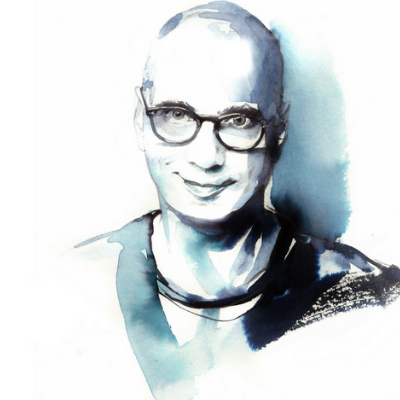
Nina Kolleck
In the first part, the researcher discusses socialisation in the age of digital media. «How we develop,» she writes, «used to be shaped primarily in local contexts – above all within the family, at school and amongst friends, but also, for example, through the church or sports clubs. Norms, role models, a sense of belonging – all the social elements that take shape there – remain relevant today.» However, she notes that these elements are now increasingly being conveyed via online platforms. Whilst the traditional settings have not disappeared, they have lost their exclusivity.
One positive aspect is that children and young people encounter topics on social media that are relevant to them and which would otherwise hardly be discussed anywhere else. However, the downsides are also addressed: for instance, the desire for authenticity coexists with the pressure to please others. Digital spaces also shape children, but are «more unbound, fleeting and unforgiving». Kolleck's analyses of socialisation and development are among the most thought-provoking passages in the book.
Another chapter explains what happens in the bodies and brains of adolescents. Kolleck demonstrates how young people seeking answers about health and wellbeing are manipulated by these platforms.
In the concluding chapter, the award-winning researcher calls for «platform regulation rather than punishing users». Furthermore, there is no evidence that bans on smartphones in schools contribute to improved academic performance or well-being. Media resilience, she argues, arises solely through engagement. Digital spaces are here to stay, she concludes.
AI in the world of tomorrow
Andreas O. Loff: It's Here to Stay. AI in the World of Tomorrow. Rowohlt Polaris 2026, 240 pages, approx. 24 Fr.
The author is a creative jack-of-all-trades, a well-known podcaster and an AI pioneer. He came to the attention of a wider audience through his video «Grandma, what was that about Germany again?», which was created using artificial intelligence.
This man with practical experience does not think much of the widespread fear-mongering surrounding AI. Nevertheless, in his book he takes a critical look at the legitimate fears. «Anyone who does not take these fears seriously – anyone who dismisses them as technophobia or a refusal to embrace progress – fails to recognise what is really at stake: trust. Participation. Control. Responsibility.»
According to several studies, young users place almost blind trust in the statements made by AI systems. Just imagine the implications.
Andreas O. Loff
Loff addresses fears of job losses, data misuse and deepfakes, as well as baseless doomsday scenarios. Nevertheless, he warns: «Anyone who still believes today that AI is merely a technical issue hasn't been listening properly. AI is the new force shaping society. This affects more than just individual success or failure. AI shapes labour markets, educational pathways and cultural relevance. And it does not do so ‹neutrally›, as some developers like to delude themselves into believing. It is shaped by the data, the models and the priorities of those who build it. In other words: by companies. By the pursuit of profit. By the logic of power.»
Loff also offers insightful explanations regarding the impact of AI on children. «The Harvard Graduate School of Education has demonstrated in several studies that young users place almost blind trust in the statements made by AI systems.» This technology is not perceived as a tool, but as an «omniscient friend».
And what impact would it have on creativity, critical thinking and social skills if human errors were interpreted as weaknesses , whilst machine errors were simply accepted as «slips»? All in all, an intelligent, relaxed and refreshingly entertaining read.
The Happy Generation
Jonathan Haidt / Catherine Price:Generation Happy. Your guide to more fun and freedom in a world full of screens. Zuckersüss Verlag 2026, 240 pages, approx. 30 Swiss francs.
This non-fiction book for children has been written by the well-known American social psychologist Jonathan Haidt and the science journalist Catherine Price. They have taken the rather gloomy arguments from Haidt's non-fiction book *Generation Angst* and turned them into a positive message for children aged eight and over. The authors’ aim is for children to see through the manipulative methods of Big Tech and seize more opportunities in real life.
The result is a colourful book full of lists, ideas and comics. Though it also contains a dash of pathos and a couple of wagging fingers. At the very least. Nevertheless, it's a book that can be thought-provoking and inspiring, particularly when read together with children. In any case, there's nothing quite like it on this subject.
Also worth reading
This philosophical and sociological essay by futurologist Christian Schuldt explores the changing self-image in the internet age. Lucid, but not an easy read.