

The career choice process begins early: as early as the second year of upper secondary school, young people start taster work placements. By the time they move up to the third year of upper secondary school at the latest, they are applying for jobs, attending interviews and receiving offers and rejections. «According to the career choice roadmap, the career choice process in secondary school spans two years,» summarises Loris Criscione.
He supports young people on this journey as a careers, study and career path adviser at the Career Information Centre (Biz) in Kloten, Zurich. «During this time, young people are very much in the process of discovering themselves. What interests and motivates them, how do they like to work, and which careers are currently realistic given their individual circumstances?»
Choosing a career requires many skills, which do not develop at the same rate for everyone.
Loris Criscione, careers adviser
Added to these questions is the diversity of the world of work. In Switzerland, there are over 200 apprenticeship trades. That's a lot to get to grips with straight away. Criscione agrees. «Young people need to get to know the world of work, organise taster apprenticeships, write job applications and present themselves,» he says. «This requires many skills, which do not develop at the same pace for everyone.»
More time
This is precisely where a vocational preparation year can help. «It gives young people time and support so that they can take another in-depth look at their career choices and find a suitable apprenticeship,» explains Ingrid Faesi, deputy head of the Vocational, Higher Education and Career Guidance Unit at the Office for Youth and Career Guidance of the Canton of Zurich.
This is particularly useful if young people are still unsure about their career choices or are not yet ready to start an apprenticeship straight away. «Two years are sometimes not enough – for various reasons,» adds the expert.
«However, the idea is not to say as early as the second year of upper secondary school: ‹I don't want to get to grips with this process, so I'll do the vocational preparation year after the third year of upper secondary school.› That's just putting it off, and important opportunities will be missed.» Both experts agree that starting an apprenticeship straight away should always remain the first choice.
Learn, try things out, find your bearings
The vocational preparation year therefore focuses not only on finding an apprenticeship but also on developing key career choice skills. Young people learn, for example, to reflect on their strengths, to assess their prospects more realistically, or to consider new career opportunities. Providers of vocational preparation years also offer a range of different areas of specialisation.
«There are school-based programmes designed to fill gaps in education, practical and workplace-based options that place greater emphasis on work experience in workshops and businesses, as well as integration-focused classes that concentrate on learning German,» explains Ingrid Faesi.
«In any case, it is important that young people do not drop out of the career choice process, even if the vocational preparation year has already begun,» adds Loris Criscione. Talking to a specialist can help to analyse the situation. «Ultimately, the overarching goal remains the same: to find an apprenticeship.»
The vocational preparation year can be an important opportunity for young people to develop their skills in a targeted way.
Loris Criscione, careers adviser
At the same time, applying for the vocational preparation year can take some of the pressure off young people. «Knowing that a plan is in place for what comes next after leaving school takes the pressure off,» says careers adviser Criscione. He has often supported young people for whom this option has provided some breathing space.
«This creates space to broaden one's horizons once again and consider which careers might be suitable.» Some people, he says, would come across careers during this extended career exploration phase that they hadn't previously considered. «For many careers, there are also alternatives that are similar to one's first career choice but are a better fit for their individual skills and grades,» he adds.
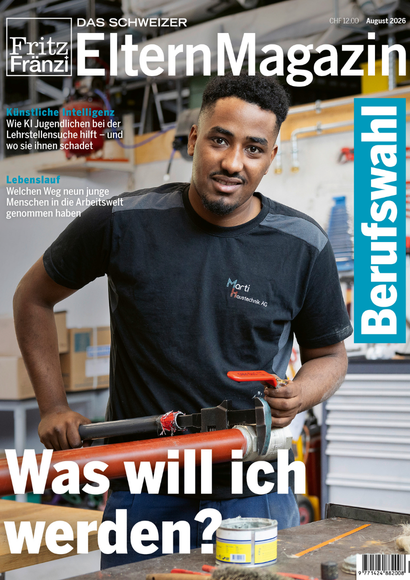
Towards a more sustainable career choice
Even after difficult experiences, a vocational preparation year can be helpful. Those who have received many rejections sometimes lose confidence in their own abilities. The vocational preparation year then helps to rebuild self-confidence, says Criscione. Furthermore, through additional taster work placements, young people can better assess which career really suits them – which in turn prevents them from dropping out of apprenticeships later on, as they have made a more sustainable choice.
A vocational preparation year is therefore neither a stopgap nor a miracle cure. «For some young people, it can be an important opportunity to develop in a targeted way,» says the careers adviser. «The prerequisite is a willingness to actively engage with one's own future.»


