

1. Can AI help me find the right career?
AI applications can ask you important questions that help you clarify your aspirations, interests and strengths. AI can also suggest training courses and careers that might suit you. However, you still have to make the choice yourself. To do this, you need real-world experience , such as taster work placements, information sessions, and discussions with your parents, professionals, teachers and careers advisers. AI can show you the options – but it's up to you to decide!
It is important that you question and check everything the AI tells you. After all, the AI does not know your personal circumstances, it does not find everything, and sometimes its answers are simply wrong.
A good rule of thumb: think it through yourself first, then use AI, and finally scrutinise its answers critically.
2. Can the AI tell me whether sixth form is the right choice for me?
AI can help you weigh up the pros and cons of secondary school or compare the benefits of a vocational apprenticeship with those of a grammar school. Just as important is what your parents, teachers and careers advisers think. It's best to list these points yourself. Then see what happens when you ask an AI to analyse them. You'll need to work out for yourself what this means for you, and you'll have to make the decision yourself.
3. What can career guidance do that AI cannot?
Career advisers discuss your personal circumstances with you in a one-to-one meeting. They pick up on things that AI doesn't detect, such as motivation, family background, values and non-verbal cues. If you wish, and where appropriate, they will carry out tests with you to help you work out what suits you best. They also have a particularly good understanding of training programmes and opportunities in the area where you live. Career guidance can support you over the long term and help you plan the steps involved in choosing a career, from the initial interest assessment right through to applying for your preferred apprenticeship.
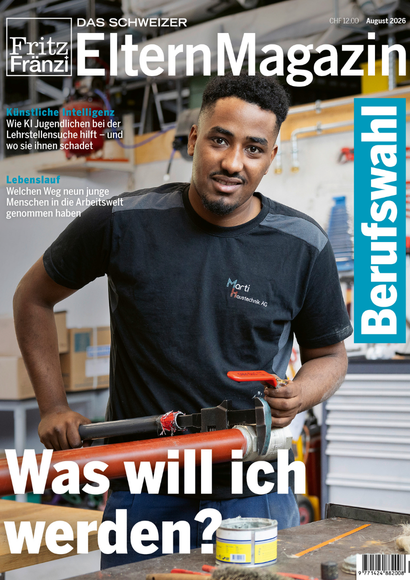
4. As a parent, I'm concerned that my child wants to use AI to solve every task. What effect are these digital helpers having on young people's skills?
There is a risk that young people will outsource their thinking, problem-solving and writing to AI. As a result, they may fail to learn what is particularly important in the world of work: namely, solving tasks or problems independently or as part of a team, critically evaluating solutions and making decisions. Both parents and schools have a responsibility here to encourage independent thinking and to check whether young people have worked out the answer themselves or simply copied it from a chat window.
5. How can my child use AI effectively without letting it take over their thinking?
It is sensible and important for young people to familiarise themselves with the possibilities offered by AI, to make use of them, to question them critically and to supplement them with their own efforts. AI can also help them to understand a task, structure it and formulate an answer. Not just young people, but everyone should be able to provide and work out an answer, even if AI has helped them to solve the problem. A good rule to follow is: think for yourself first, then use AI, and finally critically review its answers. Parents, teachers and supervisors should adopt the same approach.
Career guidance centres in Aargau, St. Gallen and Lucerne:
- beratungsdienste.ch/berufswahlunterricht
- sg.ch/bildung-sport/bslb
- beruf.lu.ch/Berufslehre/Berufswahl_und_Berufsberatung


